
Teskooano 0.28.0
Terra Firma
Land on any solid body and drive a buggy across it. Sol's worlds from spacecraft maps, Earth from measured data, weather, dust and haze, oceans, rings and belts to fly into, gas giants to descend, black holes, fictional systems and a system from any text you type.
Teskooano is a simulator of star systems you can land on. Terra Firma is the release where you get out and walk. Well, drive. Fly from orbit down to the surface of any solid body, planet, moon, asteroid or comet, land on the same ground you saw from space, and take a buggy across it. The Moon under the wheels is the Moon NASA’s Lunar Reconnaissance Orbiter measured, Mars is Mars Global Surveyor’s Mars, and Titan’s seas lie where Cassini’s radar found them.
Land on any solid body
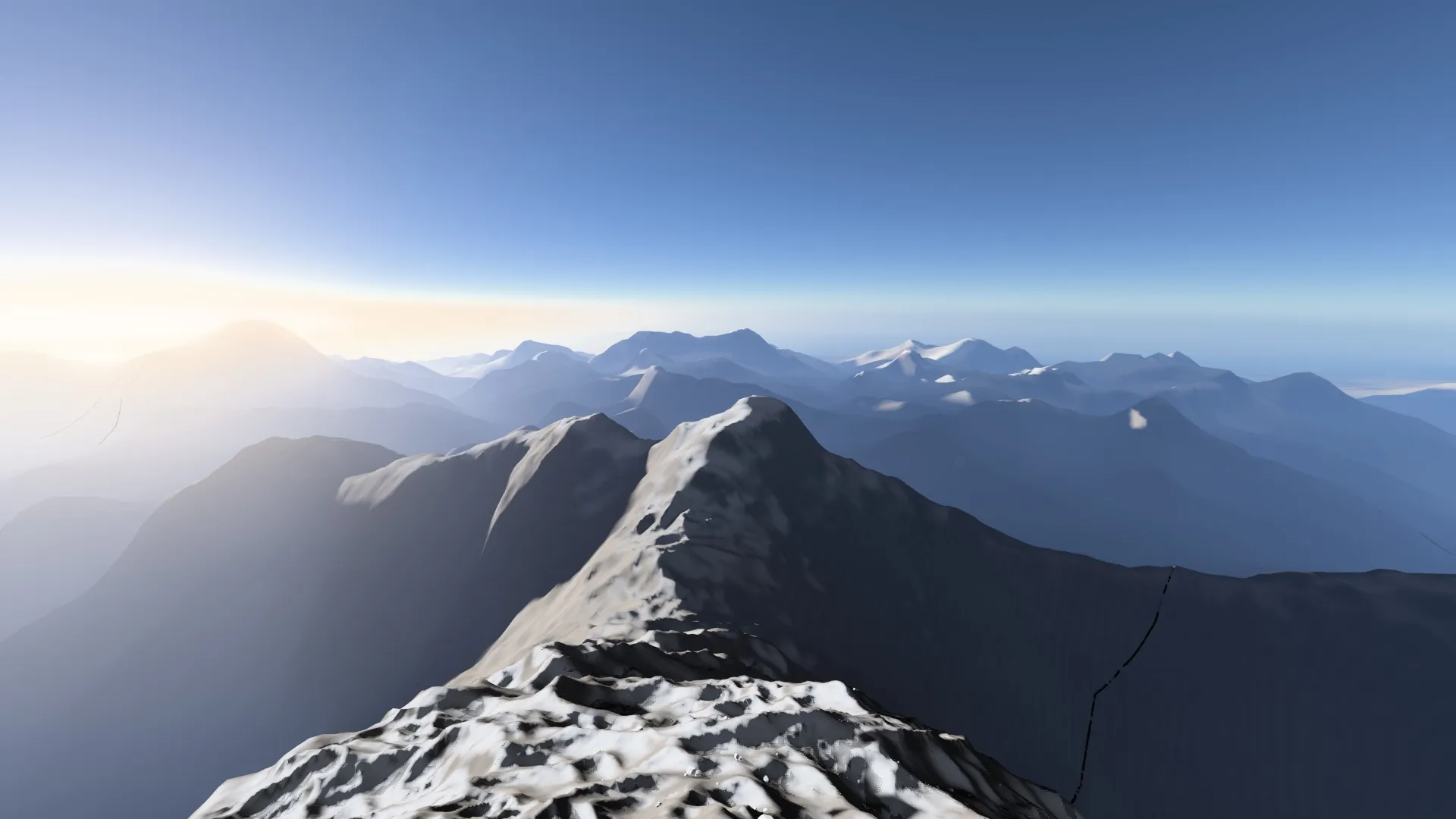
The camera flies from orbit to the ground and back as one world. The surface close up is the surface seen from orbit: coasts, mountains and seas stay where the globe shows them. Mountains form ranges with crests and valleys, airless worlds are fine grey dust over craters down to a few metres across, and rocks, trees and the land cast shadows.
Press F, or the rocket button on a touch screen, to fly. Flight speed follows your surroundings: slow near the ground, faster as you climb, up to about 4 AU a second between worlds. Asteroids and comet nuclei can be landed on too.
Take the buggy
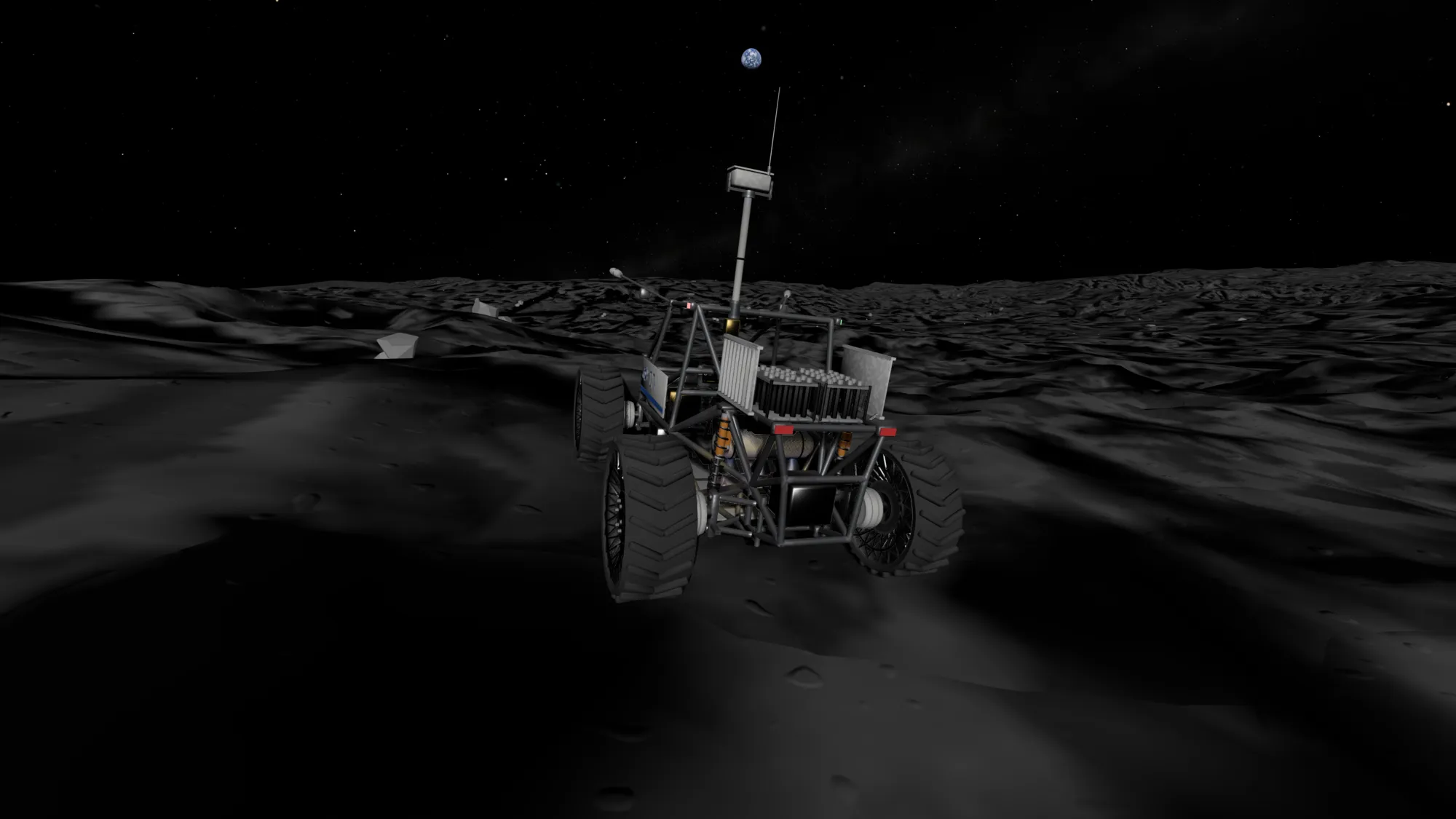
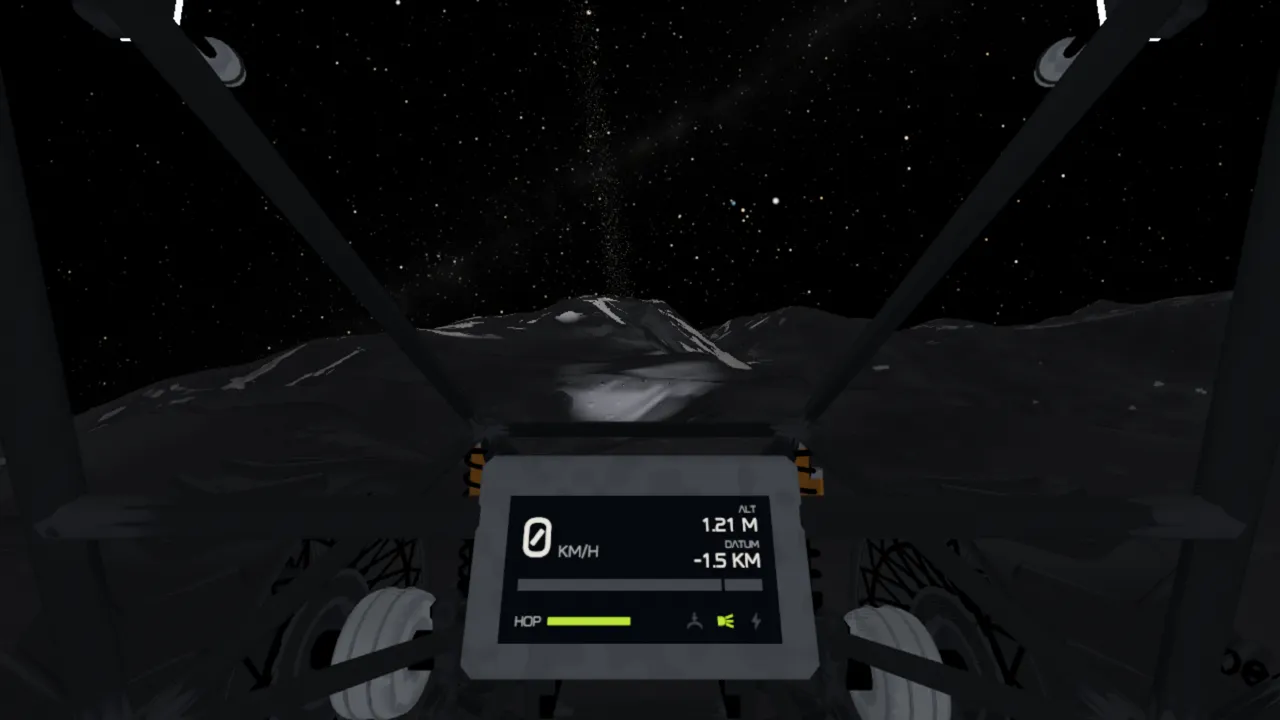
Within about a hundred metres of the ground a tip offers you the vehicle: press V and you are in a surface buggy. Drive with W, A, S and D, drag to look around the car, and press F to sit in the driver’s seat and look out over the nose. The dash shows your speed, your height, the throttle and a small bar of hop fuel.
On comets and asteroids, where a real car would bounce off into space, gravity assist holds the buggy down so it grips and climbs crater walls; N switches it off if you want the real pull, and the number pad fires small thrusters for hopping about. It has head lamps for the night side. Press ? at any time for every key that works right now, in orbit, in flight or at the wheel.
One HUD, wherever you are
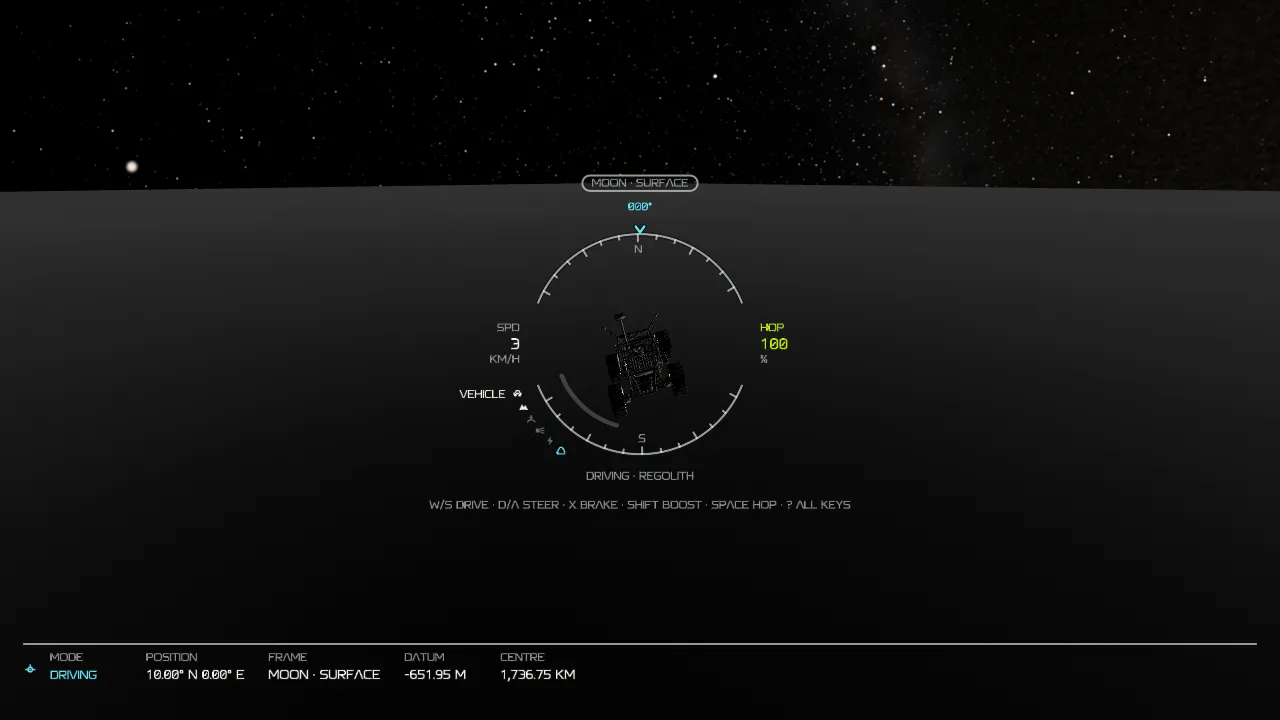
Orbit, flight and driving share one set of instruments: a navigation ring in the middle of the view and a strip along the edge. The ring carries your heading, the horizon and the mark of the nearest sun; speed and altitude sit just outside it. Near a world it shows your pitch against the horizon, so you can see the angle you are coming in at before the ground does. Boost lights the same band whether you are flying or driving.
The Solar System from spacecraft maps
Sol’s worlds are built from what spacecraft measured. The Moon follows the Lunar Reconnaissance Orbiter’s heights, with the South Pole-Aitken basin nearly seven kilometres deep. Mars follows Mars Global Surveyor: Olympus Mons stands about twenty-one kilometres over Tharsis. Mercury comes from MESSENGER, Venus from Magellan’s radar, Ceres and Vesta from Dawn, Enceladus and Titan from Cassini, and Pluto and Charon from New Horizons, with the far sides the spacecraft never saw filled in to match. Io, Europa, Ganymede, Callisto, Triton and the larger moons of Saturn and Uranus are painted from their spacecraft maps.
Titan has Kraken Mare, Ligeia Mare, Punga Mare and Ontario Lacus with their real outlines. Rosetta’s comet, 67P, and Arrokoth, the snowman New Horizons flew past, are both there to land on.
The planets, their moons, the dwarf planets and the best-known asteroids and comets start from NASA JPL Horizons positions and masses for 11 November 2026. Sol has all 464 known moons, Venus spins backwards, and the interstellar objects follow their real paths.
Earth
Earth’s continents, mountains, coasts and sea floor come from NOAA’s ETOPO 2022 heights. The great summits stand at their surveyed heights, Everest at 8,849 metres. Earth has 1,207 lakes at their real levels, and Challenger Deep reaches 10,935 metres.
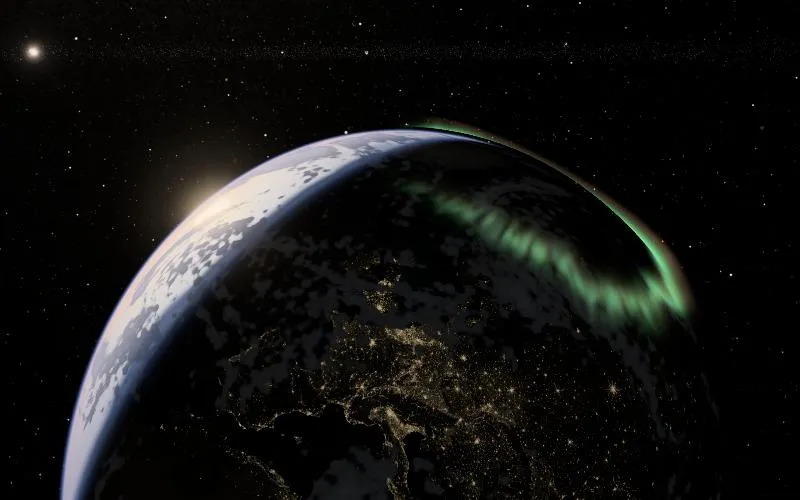
Seasons and the time of day follow the date. City lights at night, and towns, roads and street lamps on the ground, are placed from a measured map of where people have built. From a few kilometres up at night, a city runs to the horizon as a grid of lit streets.
Weather, dust and haze
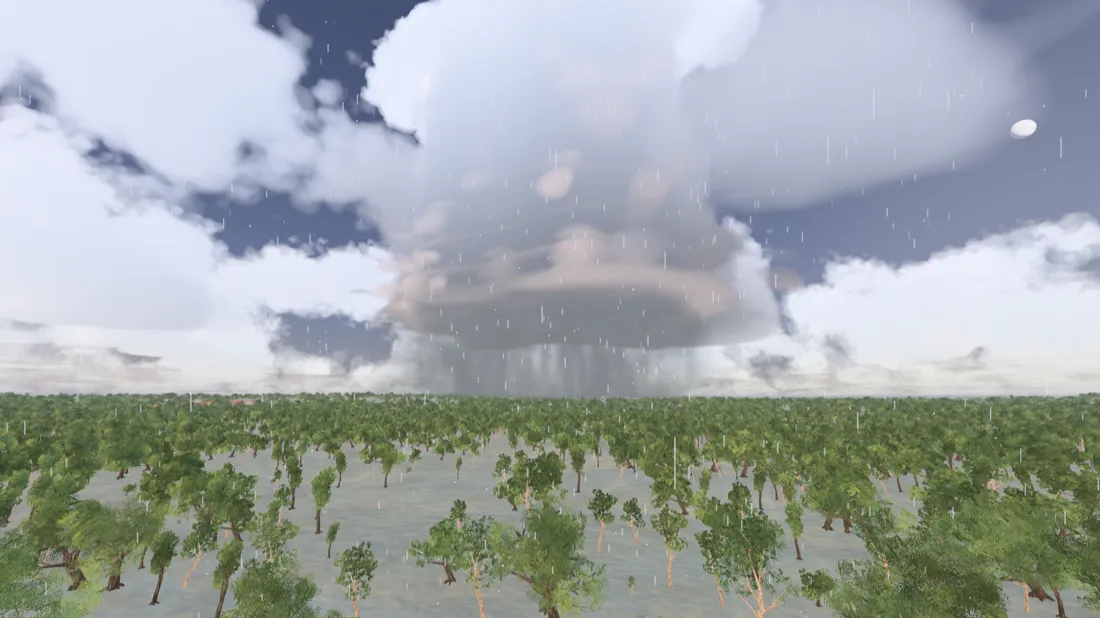
Worlds with weather have thunderstorms: solid towers of cloud, turret on turret, spreading into an anvil, with lightning, rain, snow and hail beneath. Rain falls by climate, morning mist lies in valleys, and forests follow each world’s climate from rainforest to conifers.
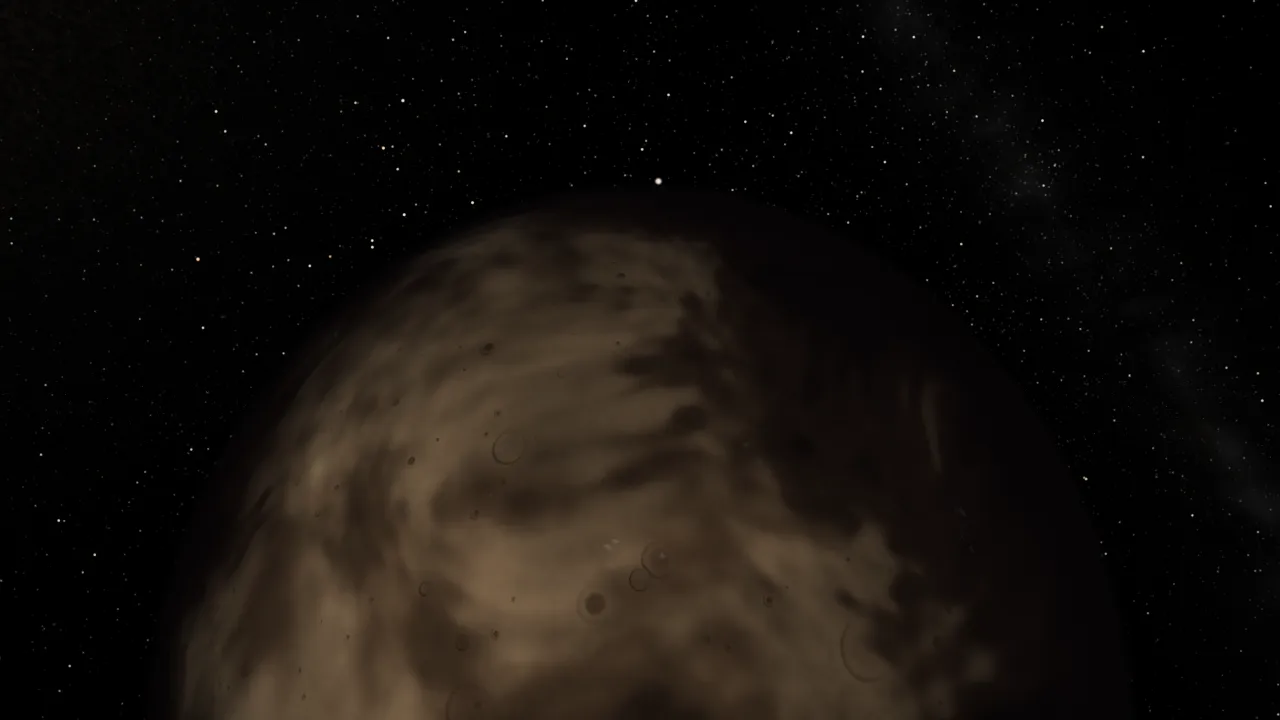
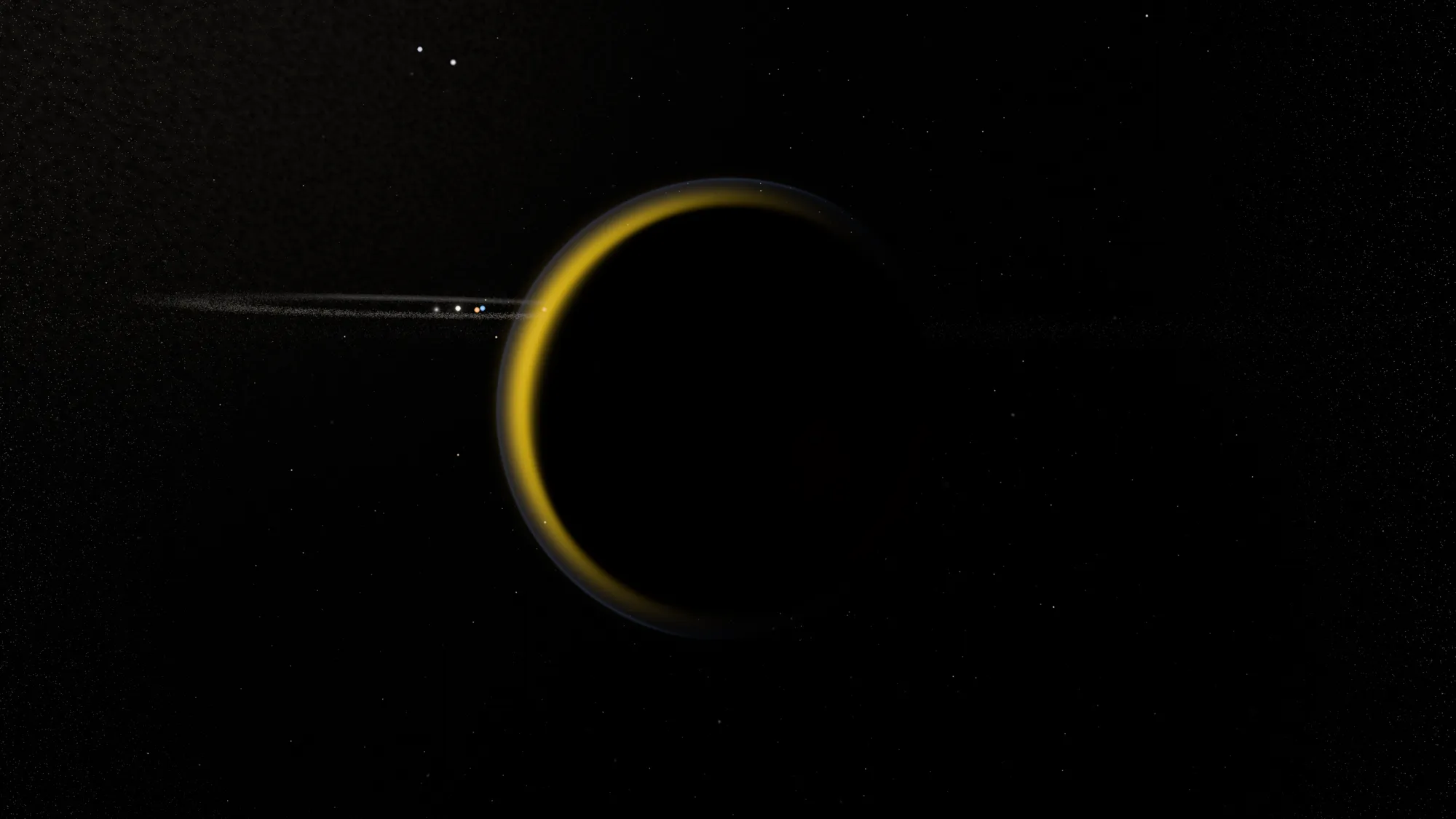
Air comes in layers. A fifth of Mars’s dust hangs 15 to 25 kilometres up, so a low sun lights a faint band along the limb. Titan’s orange haze rises high above the surface, and from orbit its edge is a deep glowing band where day fades softly into night. Under a thick deck the stars dim, the rain takes the colour of the light that reaches it, and on Titan that colour is orange.
Oceans
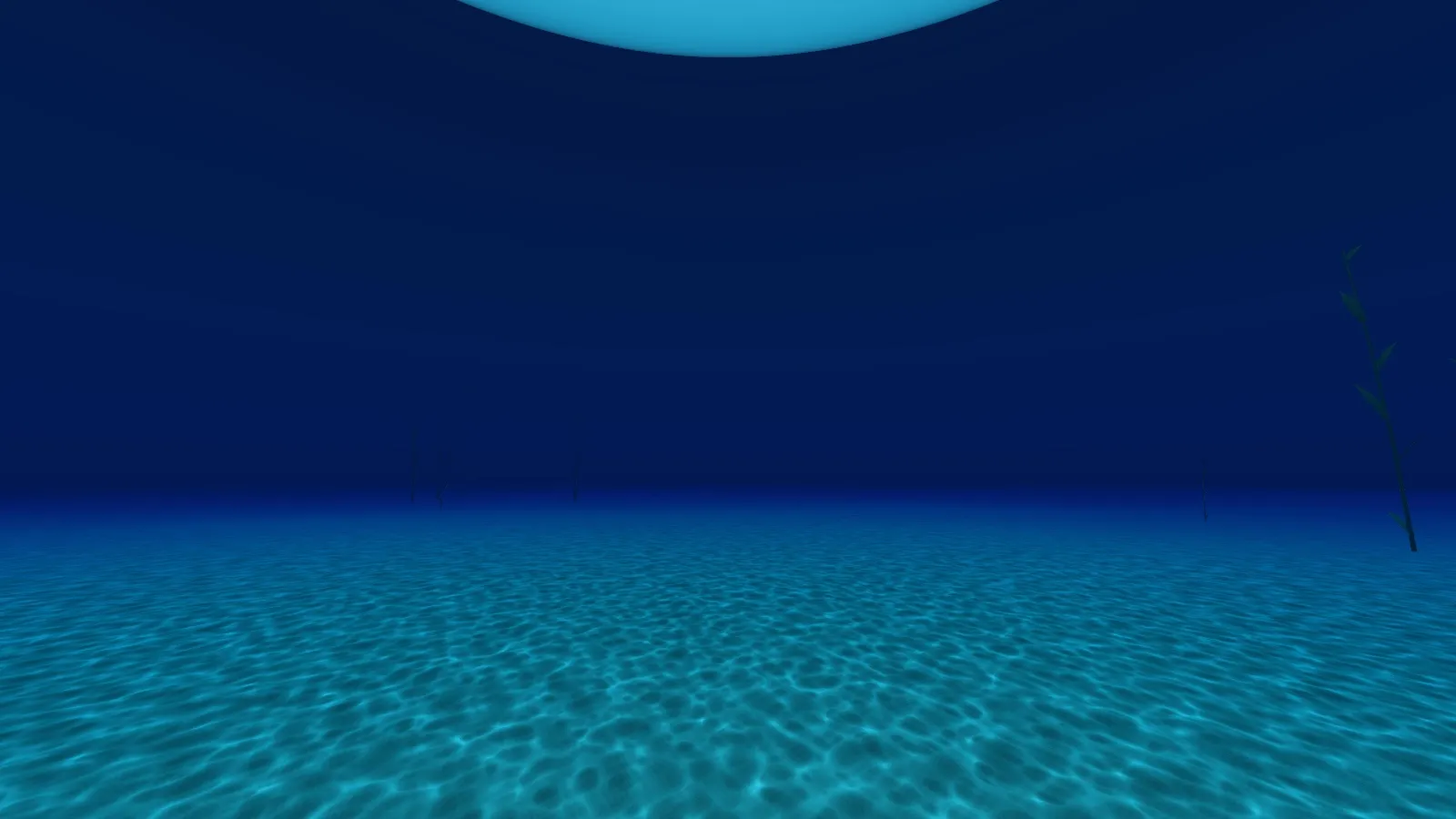
Fly down over a sea and the camera goes through the surface to the sea floor. Shafts of light come down from above, waves focus sunlight into lines on the sand, and looking up shows the sky through a round window in the surface. Warm, shallow seas have coral reefs, seagrass and kelp. Worlds with seas also have lakes and dry salt basins above sea level.
Rings and belts
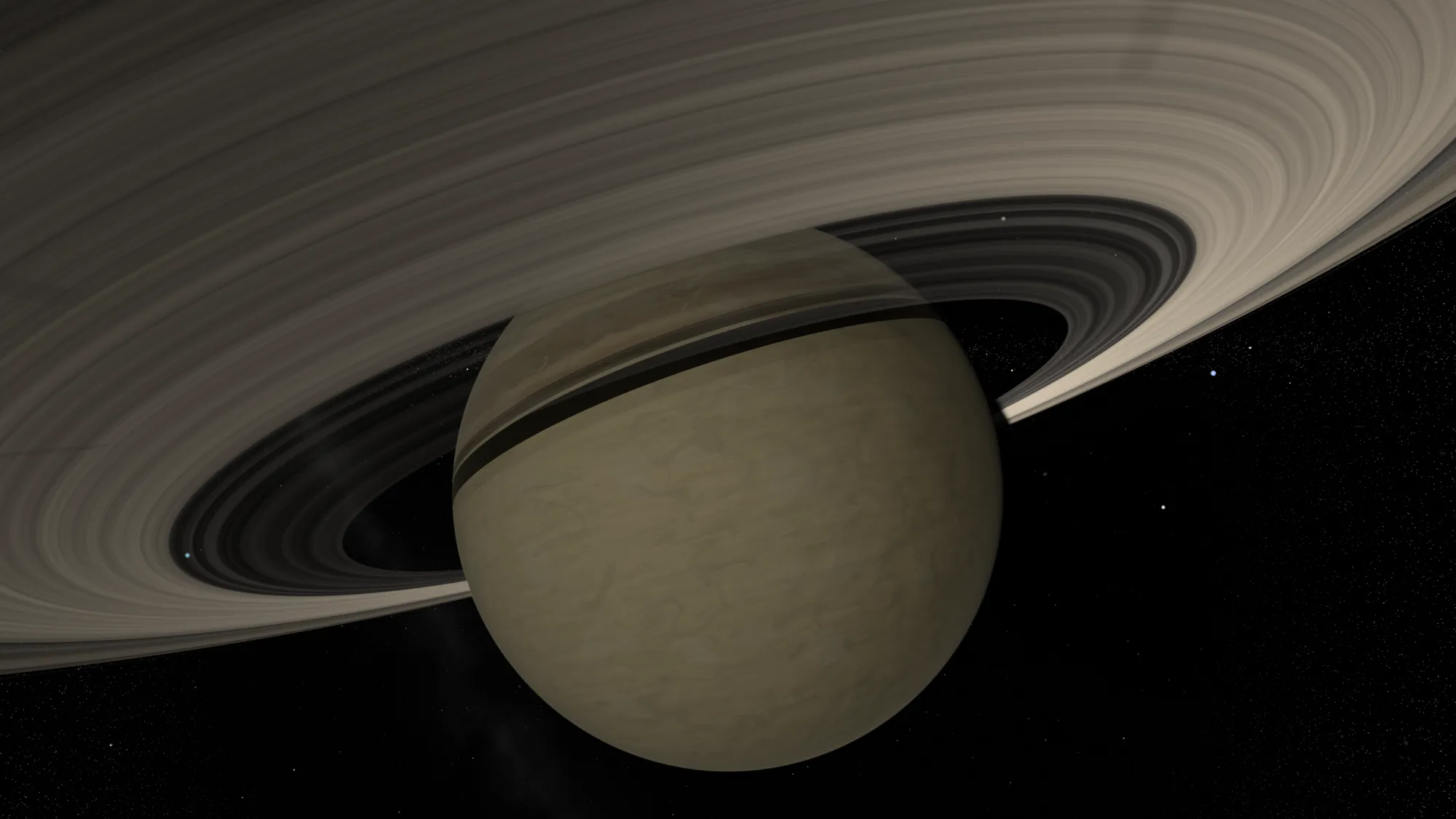
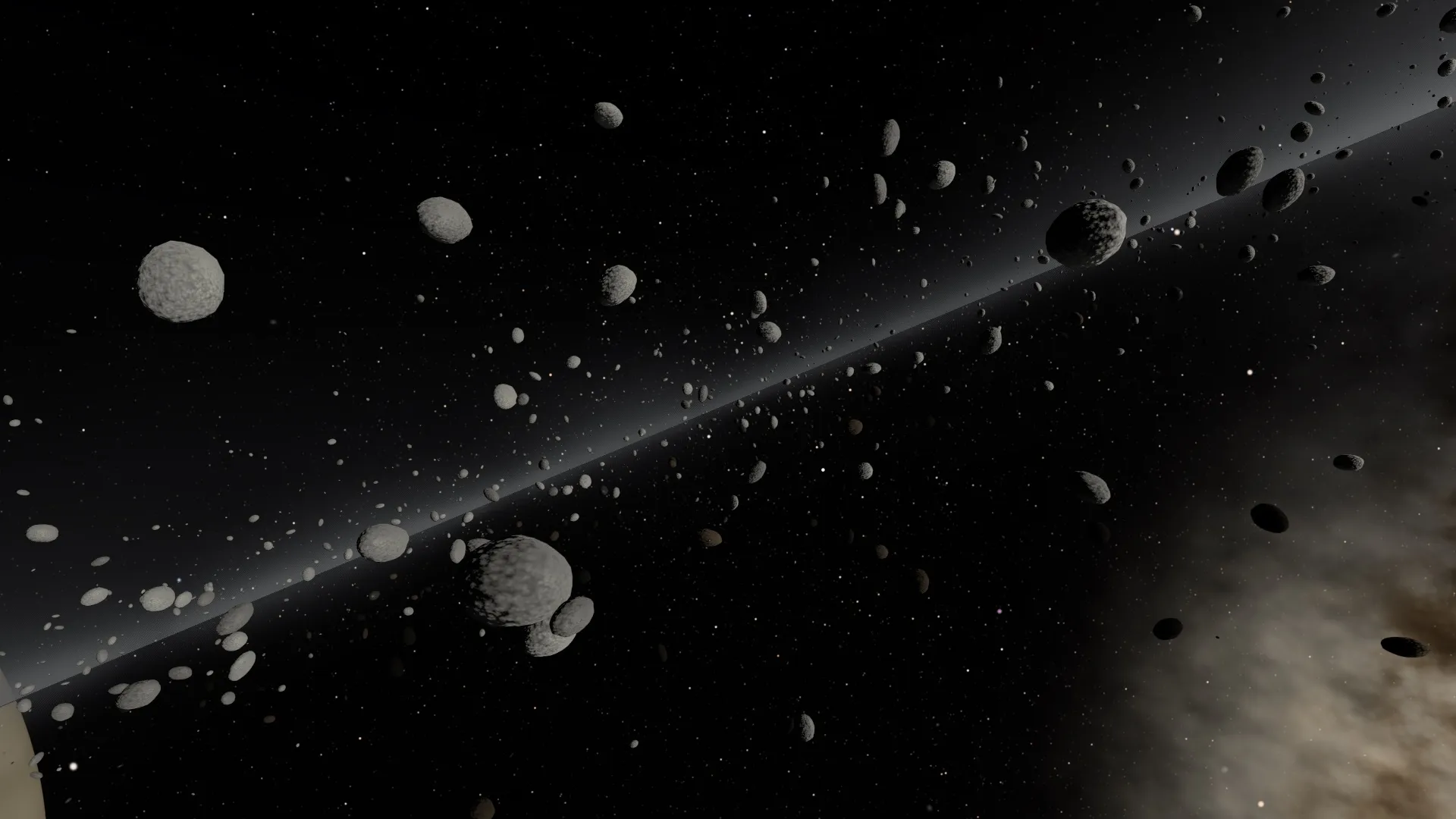
Saturn’s rings follow spacecraft measurements: the C ring, the bright B ring, the Cassini Division, the A ring and the Encke gap at their measured distances, in the faint warm tint Cassini recorded. Skim low over them and they are pale frosted ice, separate pieces fading into a haze of ice dust. With the Sun behind them the faint dusty rings blaze; with the Sun at your back the whole sheet brightens. You can see Saturn’s cloud tops through the thinner rings.
Asteroid belts are worth the detour as well. The rocks around you show craters, boulders and joints with dust in the hollows, the icy belts carry frost in their pits, and the Kuiper belt is out there too, dim and a long way off.
Down into the gas giants
Fly down into a gas or ice giant: through raised cloud tops that catch a low sun and cast shadows, past storm towers, to the open gas under the cloud base, with lightning, rain and mist thickening into a glow. Lightning takes its colour from the giant’s own air. Jupiter has about a dozen bands in its measured colours, Saturn’s hexagon is a jet stream at its north pole, and a backlit giant wears a thin bright rim. Venus has its cloud decks, and you can descend through them too.
Auroras and the Sun
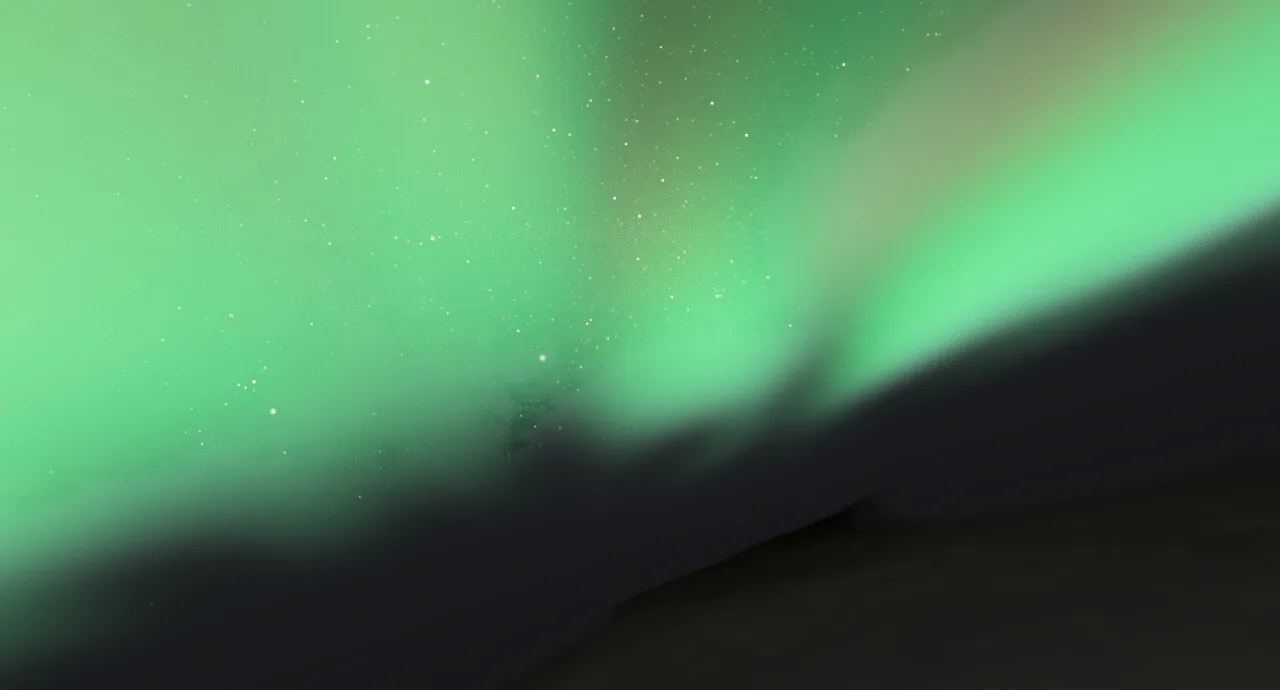
Worlds with a magnetic field and a star’s wind have auroras around their magnetic poles; Earth’s circle the real magnetic pole over Canada, and Saturn’s is a narrow pink ring near 75° north, where Cassini saw it. Stars throw off coronal mass ejections, and when one reaches a planet its auroras brighten. Fly close to the Sun and its surface boils with granules that die and re-form about every ten minutes.
Black holes
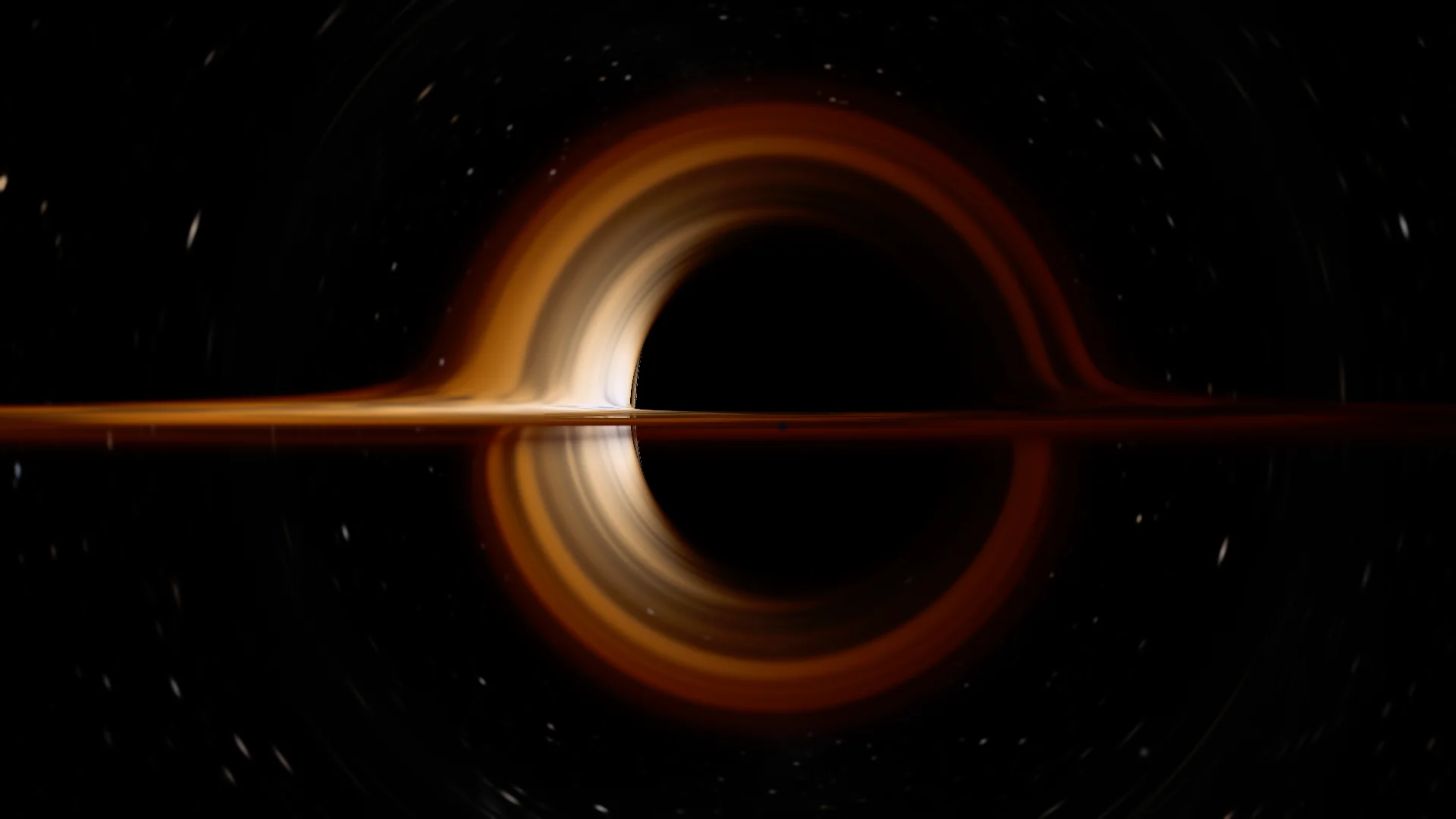
A black hole is drawn from its mass, its spin and how much gas is falling in. A spinning hole’s shadow is lopsided and its disk brighter on the approaching side. Four real black holes are in the catalogue: Cygnus X-1, GRS 1915+105, Gaia BH1 and Sagittarius A*, with the star S2 on its 16-year orbit. Gargantua, from Interstellar, opens with a free account.
Fictional systems, and a seed from any text
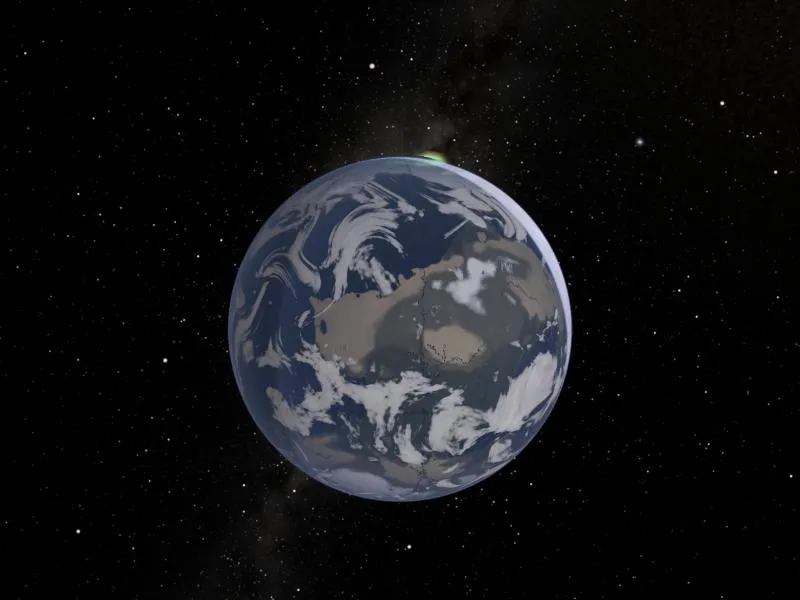
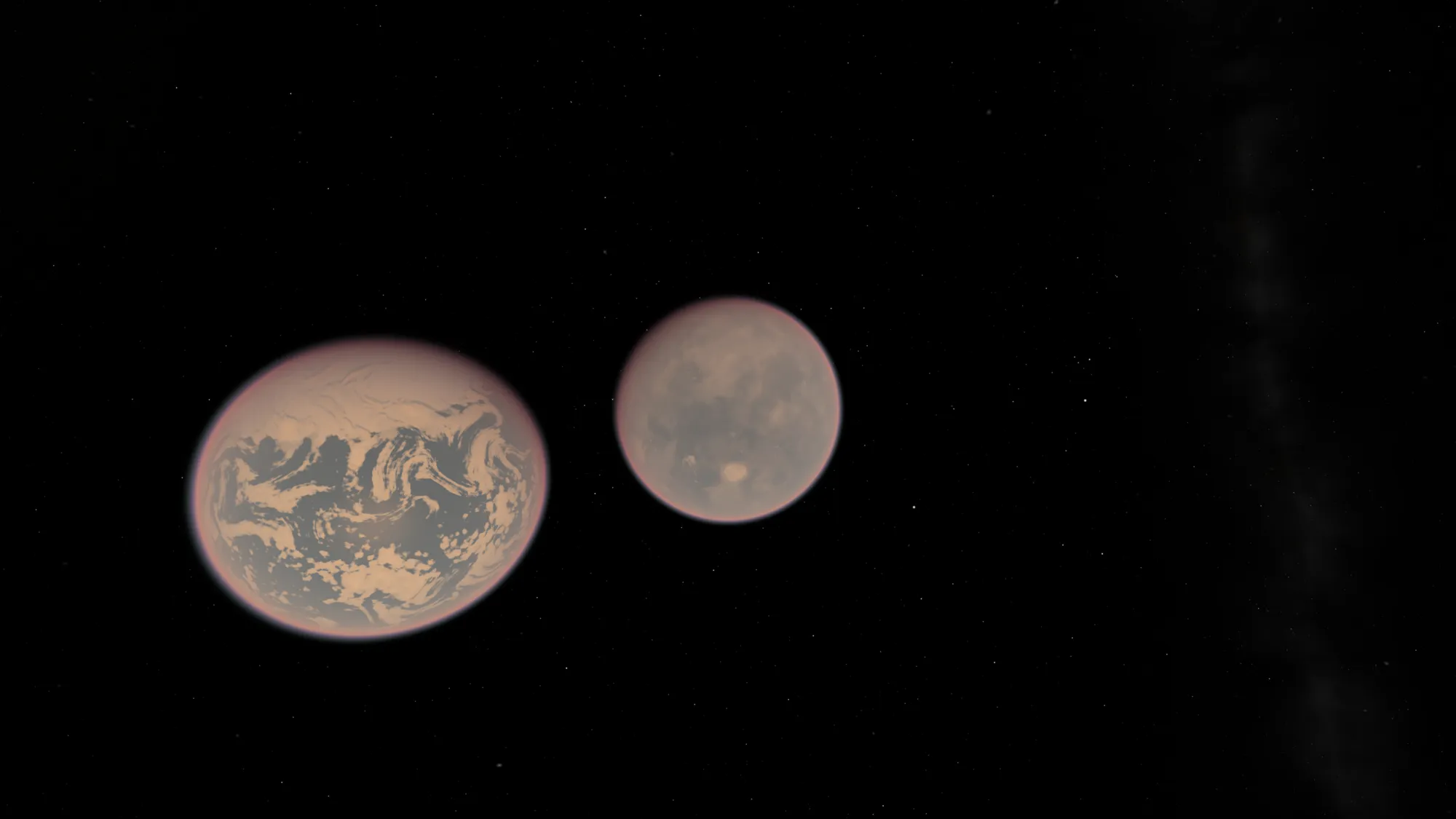
The fiction systems keep the worlds their stories describe and have their peoples: Rocheworld’s twin worlds, Trisolaris under its three suns with its climate following them, the Twelve Colonies, The Verse, Arrakis, Kalgash and more. Inhabited worlds light their nights in the style of their era, and their named cities are built on the ground.
Or make your own. A seed can be any text: a number, a word, a whole sentence, an emoji. Type your name and see what you get. The same text always makes the same system. Some seeds come with people: about one system in fourteen has a peopled world or the ruins of one, and more have a lonely outpost on a bare rock.
Light from the stars
Every world is lit by its own stars, by their colour and by how much light really arrives. Far worlds are dimmer the further out they are, and your eye opens up to keep them readable. Worlds with several suns take light from each. Street lamps come on when the star is actually low, ships are lit by the star they are near, and a planet seen as a dot is as bright as the light it sends you, so a crescent is faint and a full disc is not.
Things to find
- Rosetta’s comet, 67P, with its two lobes, and Arrokoth, the snowman New Horizons flew past. You can land on both.
- A comet near its star, with a coma a hundred thousand kilometres across and tails tens of millions long.
- A solar eclipse from orbit: a small dark core inside a broad grey shadow sliding over the Earth.
- Saturn’s hexagon, a jet stream round its north pole.
- Io’s shadow crossing Jupiter’s cloud tops.
- Two bodies colliding and merging into one, the bigger taking the smaller’s mass and momentum.
- Seeded ringed worlds with Saturn-style gaps and spokes you can fly into.
- Phobos rising over Mars as a lumpy little world, and the Moon from Earth as a disc you can see the seas on.
- Challenger Deep, 10,935 metres down, and Everest, 8,849 metres up, on the same planet in the same afternoon.
- Sand seas with dunes, glaciers cut by cracks, and Europa’s crust of ice plates.
- The star S2 swinging round Sagittarius A* on its 16-year orbit.
- The Grand Tour: sit back and be flown round every star, planet and moon in a system.
- A gas giant’s Info panel, which lists its bands, winds and storms from north to south.
- Habitable zones that move with their stars, and Lagrange points for every planet, dwarf planet and major moon.
- Takes: record a flight and play it back; with Teskooano Full it is kept in your account and plays on any device.
- Achenar and Maia, from Elite Dangerous.
- All of it on a phone or tablet, with a flight button and touch controls.
Plans
- Without an account: look around Sol, TRAPPIST-1, Kepler-16 and The Verse.
- Free account: the whole catalogue. Seeds, basic editing and up to 10 saved systems come with it.
- Teskooano Full: one purchase opens everything, now and to come, including the editor on its way, where you build any system from scratch with full control.
See Plans for what each includes.