Sol
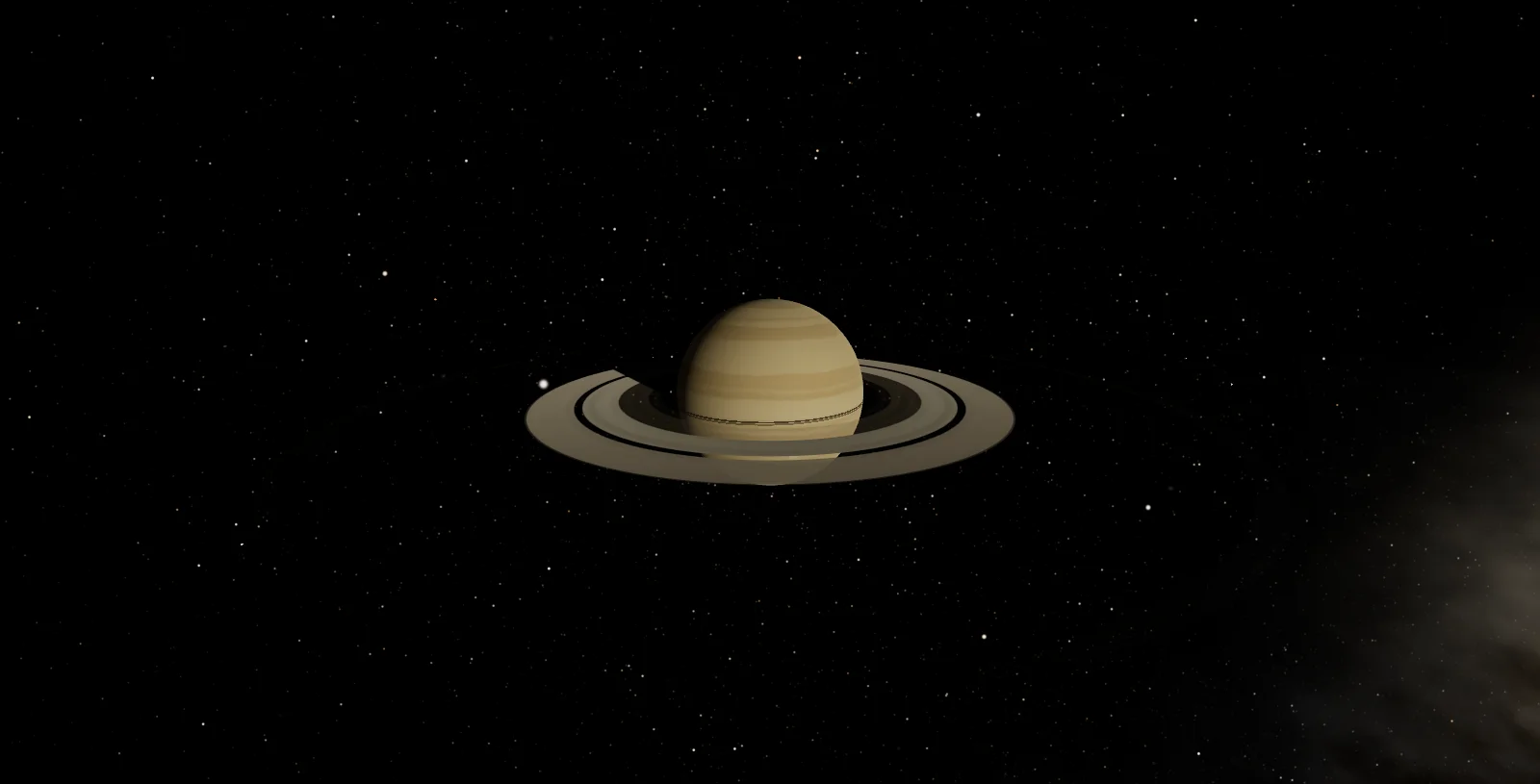
Our Solar System, placed where it is today.

Open a system from the catalogue, or generate a new one from any seed.
Systems built and kept up to date by the Teskooano team.
Our Solar System, placed where it is today.
The nearest stars: Alpha Centauri A and B on an 80-year orbit, and Proxima Centauri 8,700 AU out with two planets.
An ultracool dwarf with seven rocky planets in a resonant chain, three of them in its habitable zone.
The first transiting circumbinary planet: a Saturn-mass world orbiting a K and an M dwarf every 229 days.
A K dwarf with the transiting hot Jupiter HD 189733 b, the first exoplanet whose colour and winds were measured.
Candidate: two transit-like signals in TESS light curves of a K dwarf 116 light years away, a hot rocky world on a 3.2-day orbit and a sub-Neptune on an 11.1-day one. Found in 2026 by an amateur working with Claude; TESS observes it again from 31 October 2026.
The nearest single star to the Sun, 6 light years away: a red dwarf with four planets smaller than Earth, all closer to it than Mercury is to the Sun.
An M dwarf with four transiting planets, two of them Earth-sized and in its habitable zone.
Helvetios and Dimidium: the first planet found around a Sun-like star, in 1995, a hot Jupiter that circles it every 4.2 days.
The first exoplanets ever found, in 1992: three planets circling Lich, a pulsar that spins 161 times a second.
Copernicus and its five planets: Janssen, a lava world on an 18-hour orbit, three giants further out, and Lipperhey, a cold Jupiter at 5.6 AU.
A red dwarf whose sub-Neptune, K2-18 b, orbits in the habitable zone; JWST found methane and carbon dioxide in its air. The inner planet c is unconfirmed.
Candidate: the nearest single Sun-like star, 12 light years away, with three disputed super-Earths from radial velocities, f on the outer edge of its habitable zone.
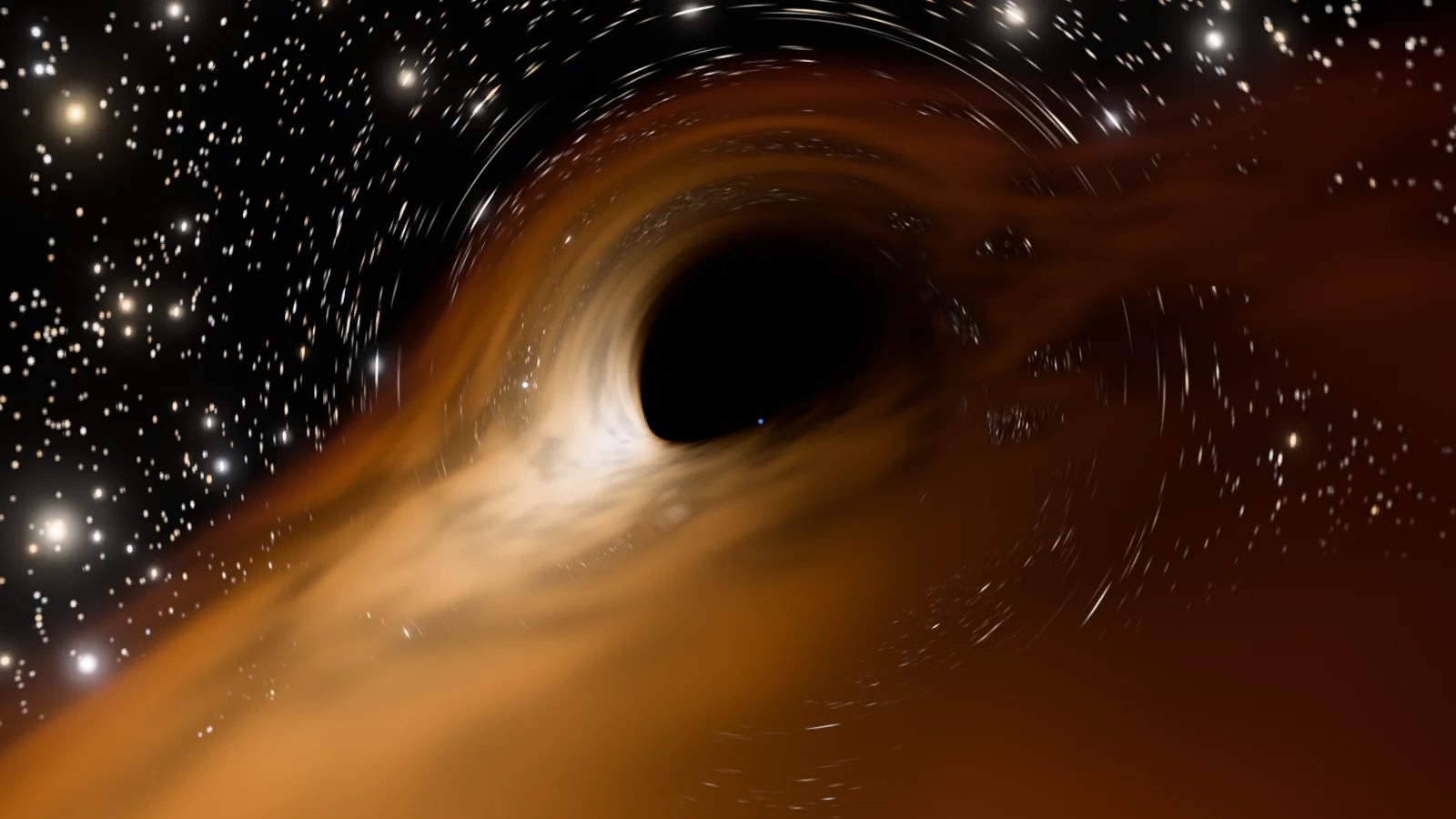
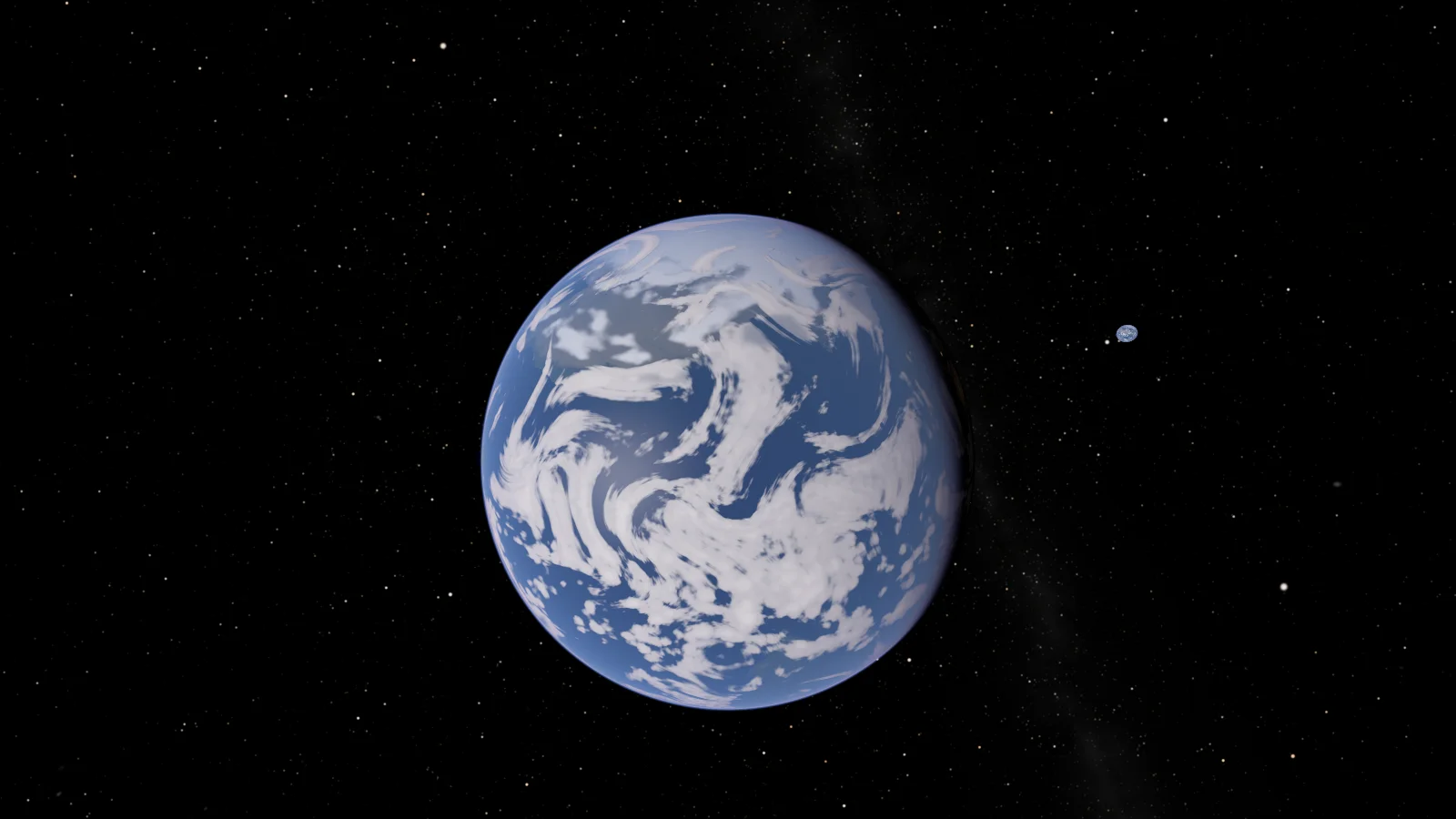
Fiction, from Interstellar: a spinning supermassive black hole of 100 million suns with Miller's water world skimming its horizon, and Mann's and Edmunds' planets further out.
Fiction, from Battlestar Galactica: four stars in two binaries, 10,000 AU apart, home to the Twelve Colonies of Kobol, from Caprica and Gemenon to Aerilon and Canceron.
Fiction, from Firefly: the White Sun and the Core, with Georgia, Red Sun, Kalidasa and Blue Sun circling it, from Londinium and Persephone out to Shadow and Miranda.
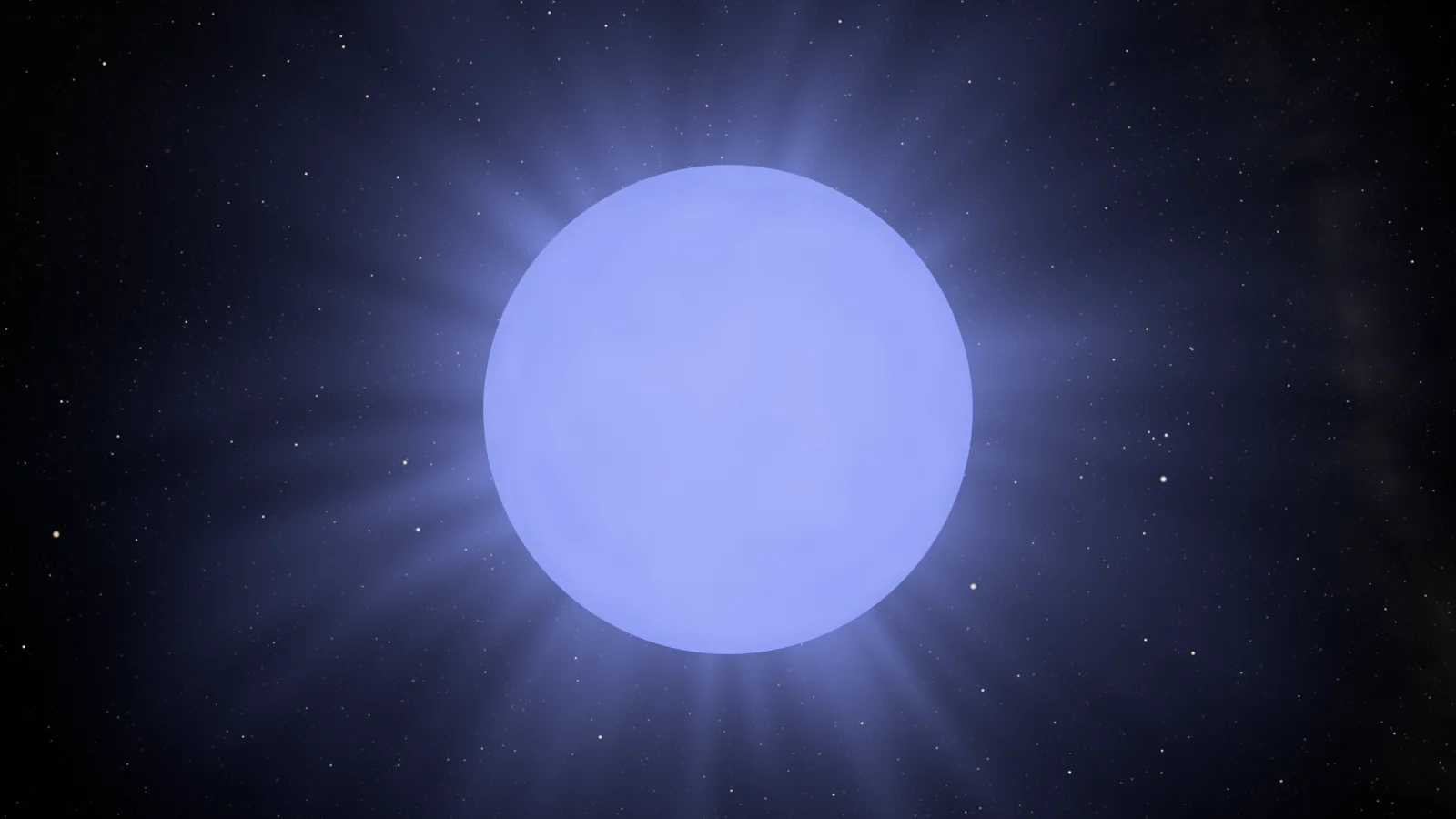
The brightest star in the night sky, and its companion Sirius B: a white dwarf with the Sun's mass in an Earth-sized star, on a 50-year orbit.
Star Trek's Vulcan sun: an orange dwarf, with a white dwarf and a red dwarf orbiting each other 400 AU away.
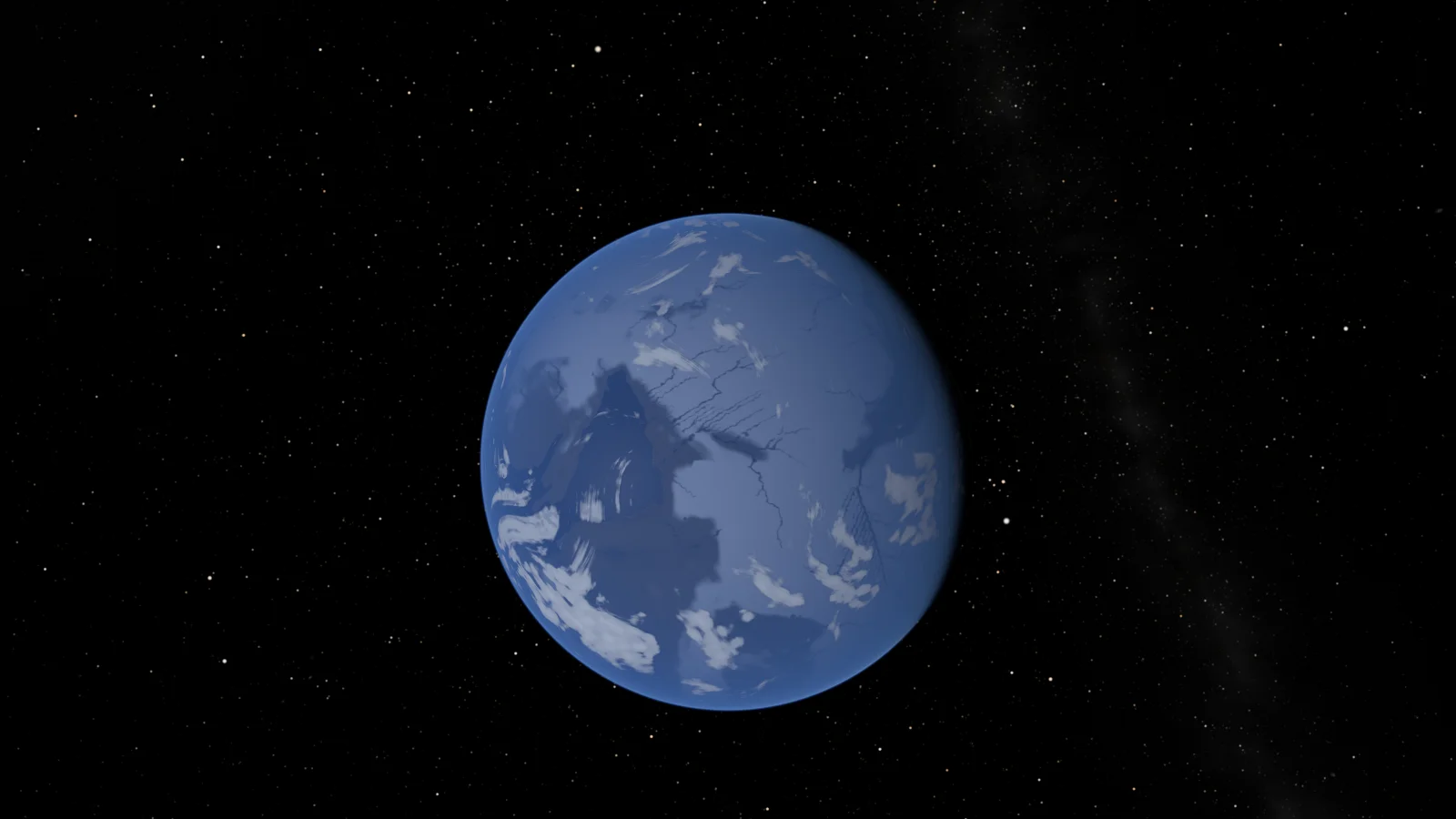
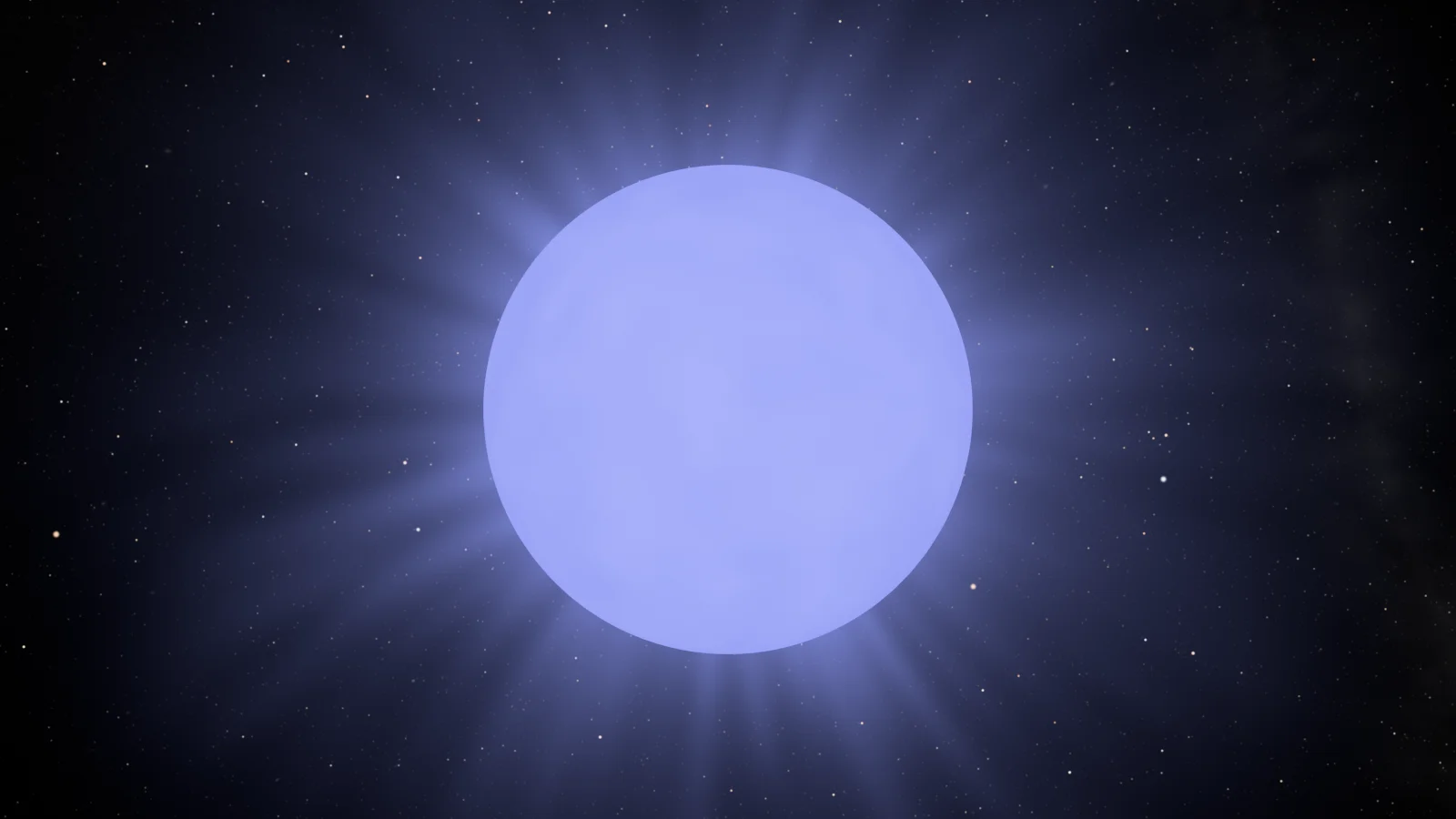
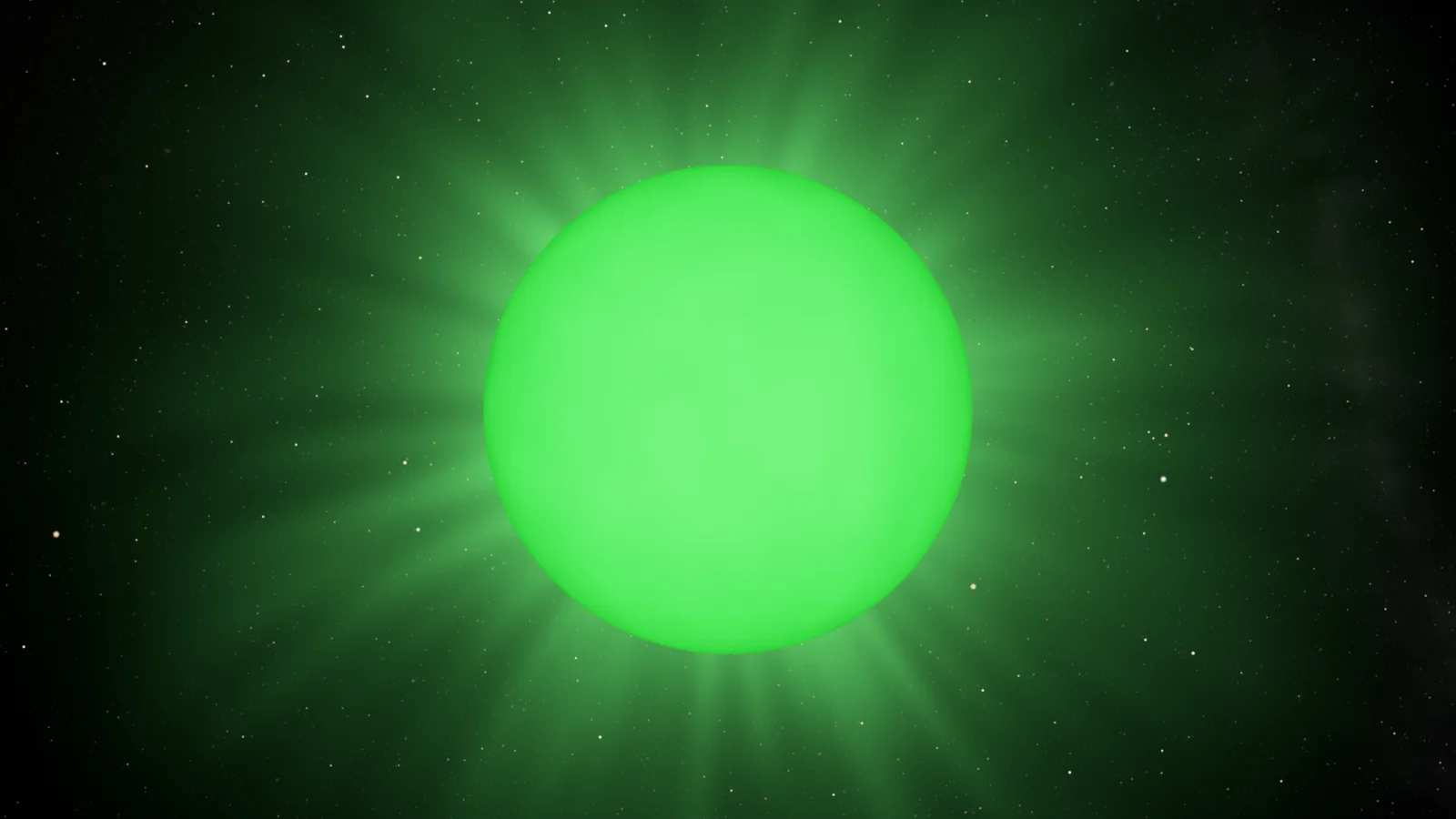
The first green star: a cool white dwarf whose atmosphere took in sodium from the debris of its planets. No planets are known; the ones here show a surviving giant stirring rock inward to be shredded.
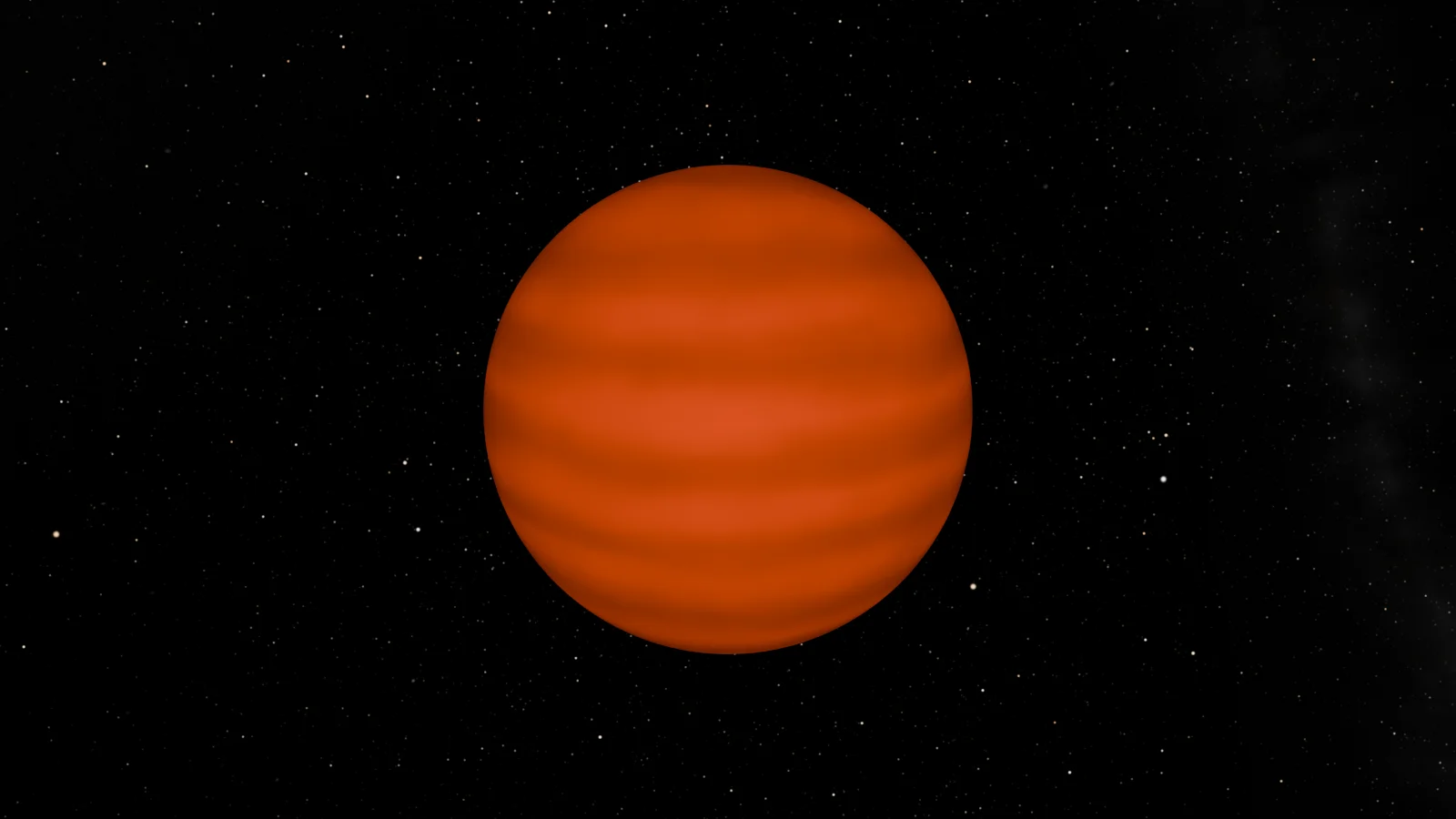
The nearest brown dwarfs: an L dwarf and a T dwarf, too small to fuse hydrogen, orbiting each other every 27 years.
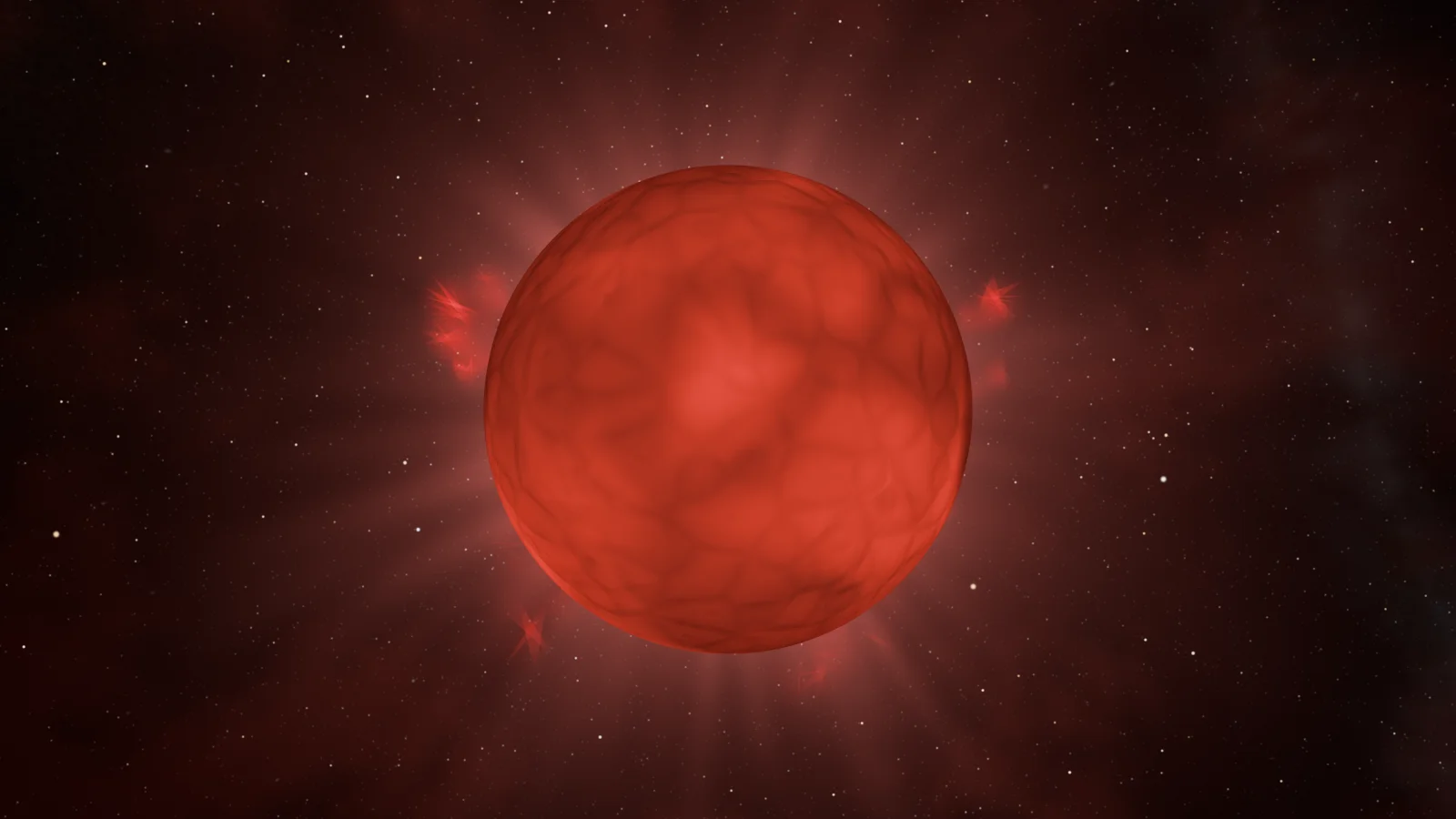
One of the coolest and reddest stars known: a carbon star 315 times the Sun's width, whose soot absorbs its blue light. No planets are known; the ones here include an ice world it has thawed into an ocean.
Made from a Seed. The same Seed always makes the same System, so you can share it by its link.