
Teskooano 0.7.0 to 0.26.0
Goldilocks
The habitable zone around every star, a catalogue of strange stars, pulsar beams, belts you can fly into, plans and Founders, and a calmer simulator.
Gargantua turned Teskooano into a whole site. Goldilocks is about where life could be, and about making that site somewhere you’d want to stay. Every star now shows where it’s neither too hot nor too cold, the catalogue fills up with stranger stars, asteroid belts become places you can fly into, and the simulator gets quieter, so the sky is the thing you look at.
Highlights
Not too hot, not too cold
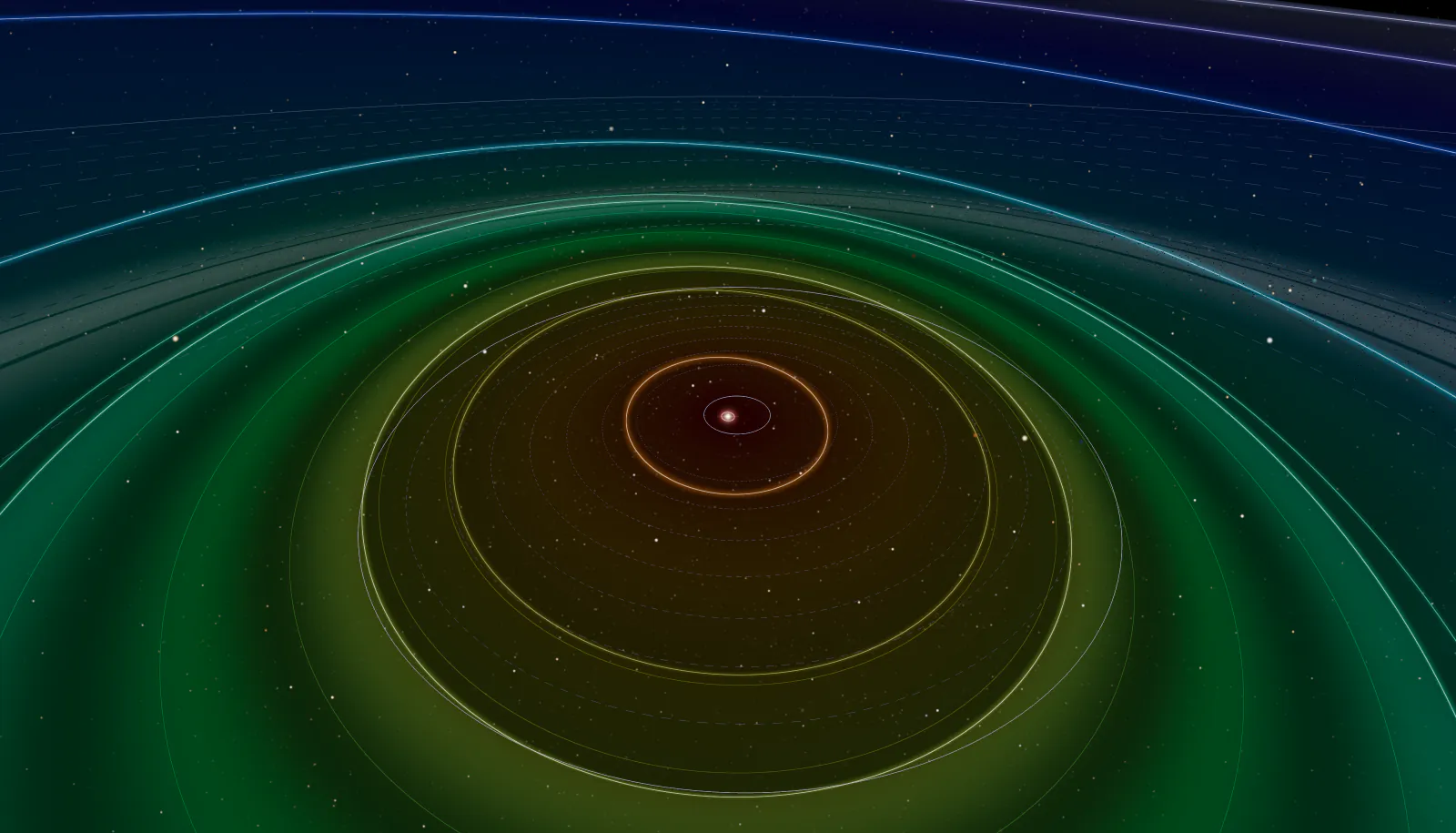
Every star now has its habitable zone drawn around it as a map. Open the scan menu and the zones fill in from scorching near the star to frozen far out, with AU rings and their distances on top. In a system of several stars, each star’s zones lie on the plane its own planets orbit in, and you can see where one star’s warmth reaches into its companion’s.
The zone you see is the same one the system generator and the analysis use, so a planet that looks temperate on the map is one the generator treats as temperate. Generation has learned to build iron worlds, the first new kind of planet, and spaces planets so their orbits last.
Stranger stars
The catalogue went from the familiar to the odd:
- Sirius and 40 Eridani, with their white dwarf companions.
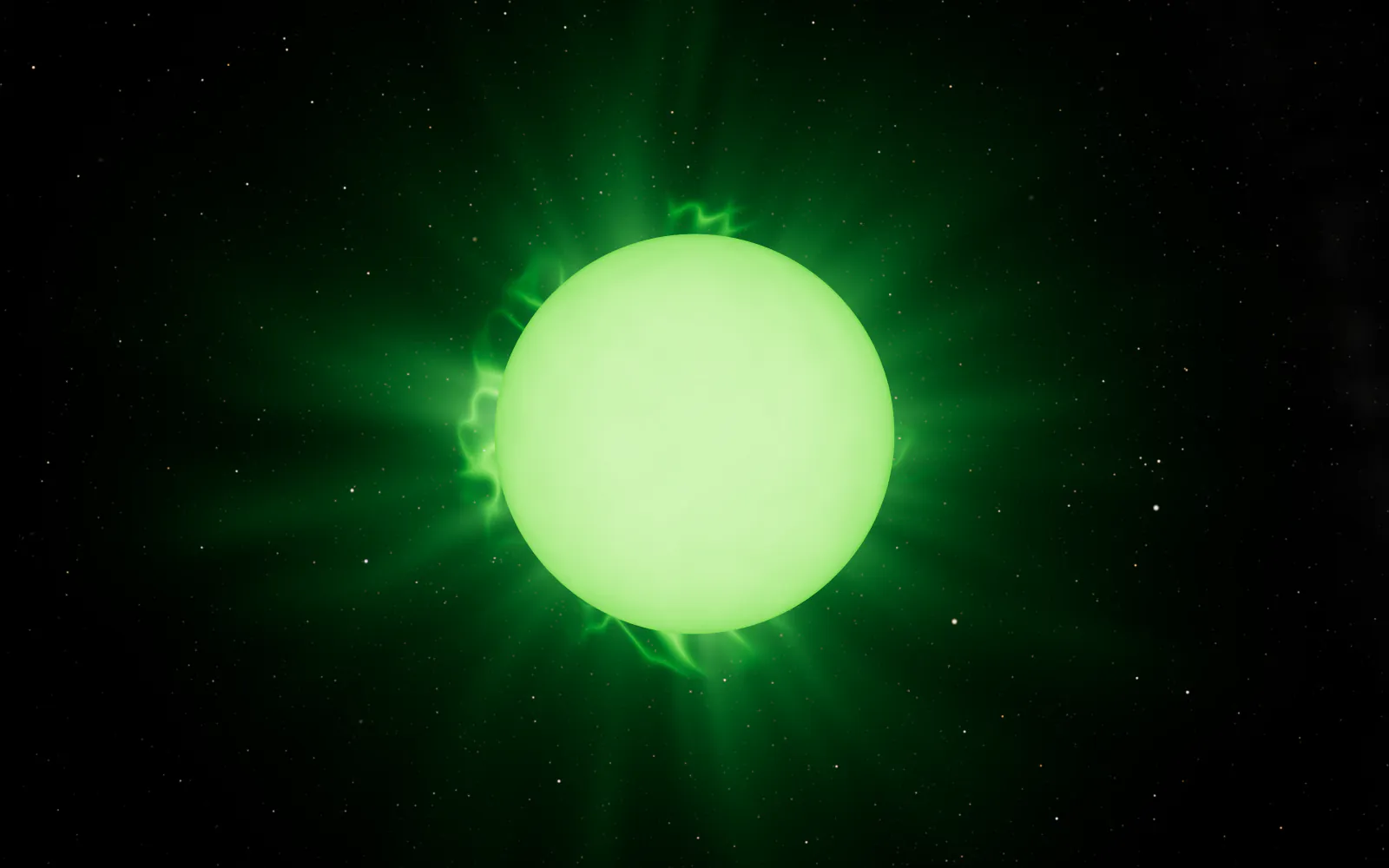
- WD J1330+6435, the green star: a white dwarf whose sodium makes it glow green.
- Luhman 16, the nearest brown dwarfs.
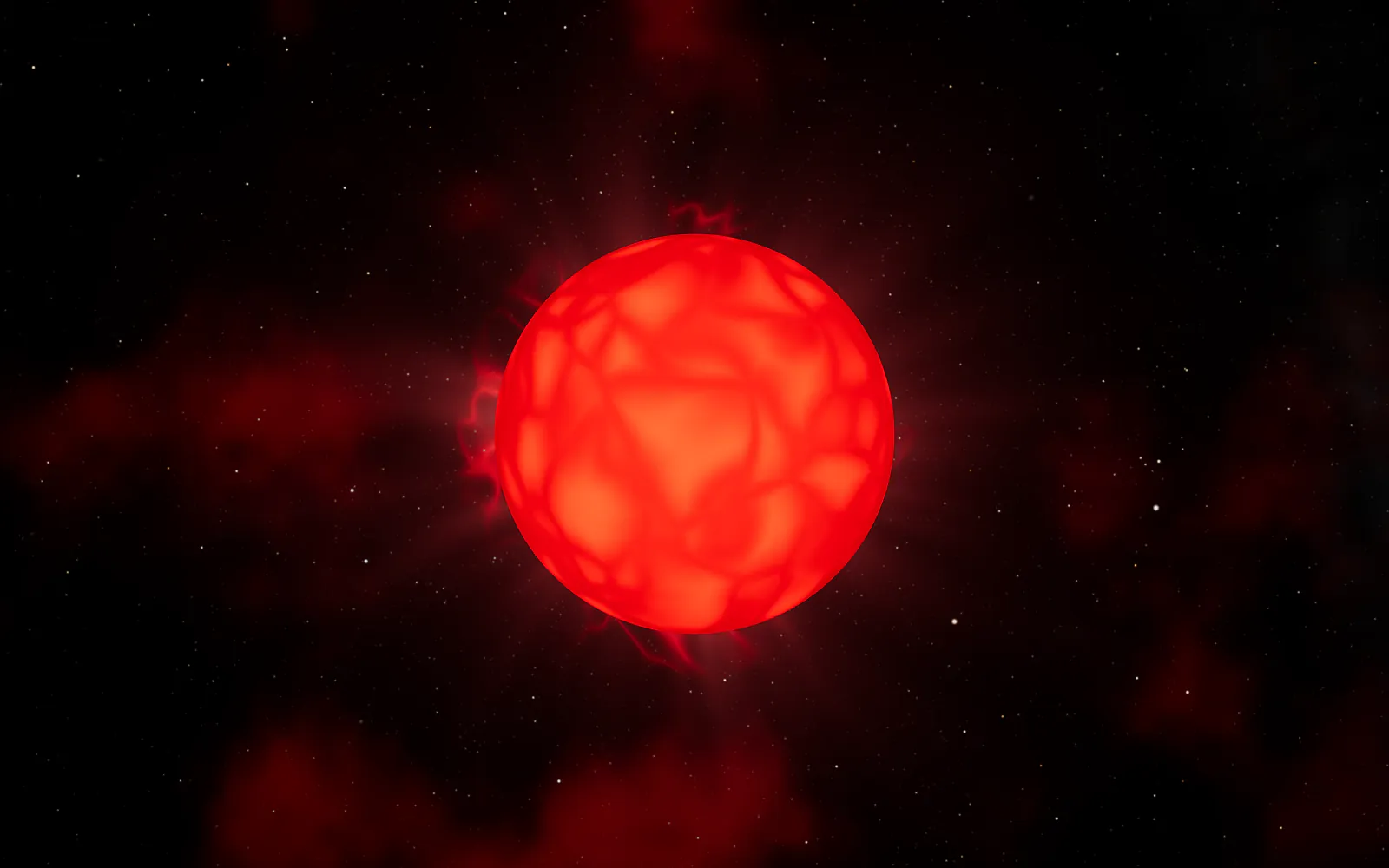
- La Superba, a carbon star hundreds of times the Sun’s width, deep red and churning.
- Barnard’s Star, TOI-700, 51 Pegasi, 55 Cancri, K2-18 and tau Ceti.
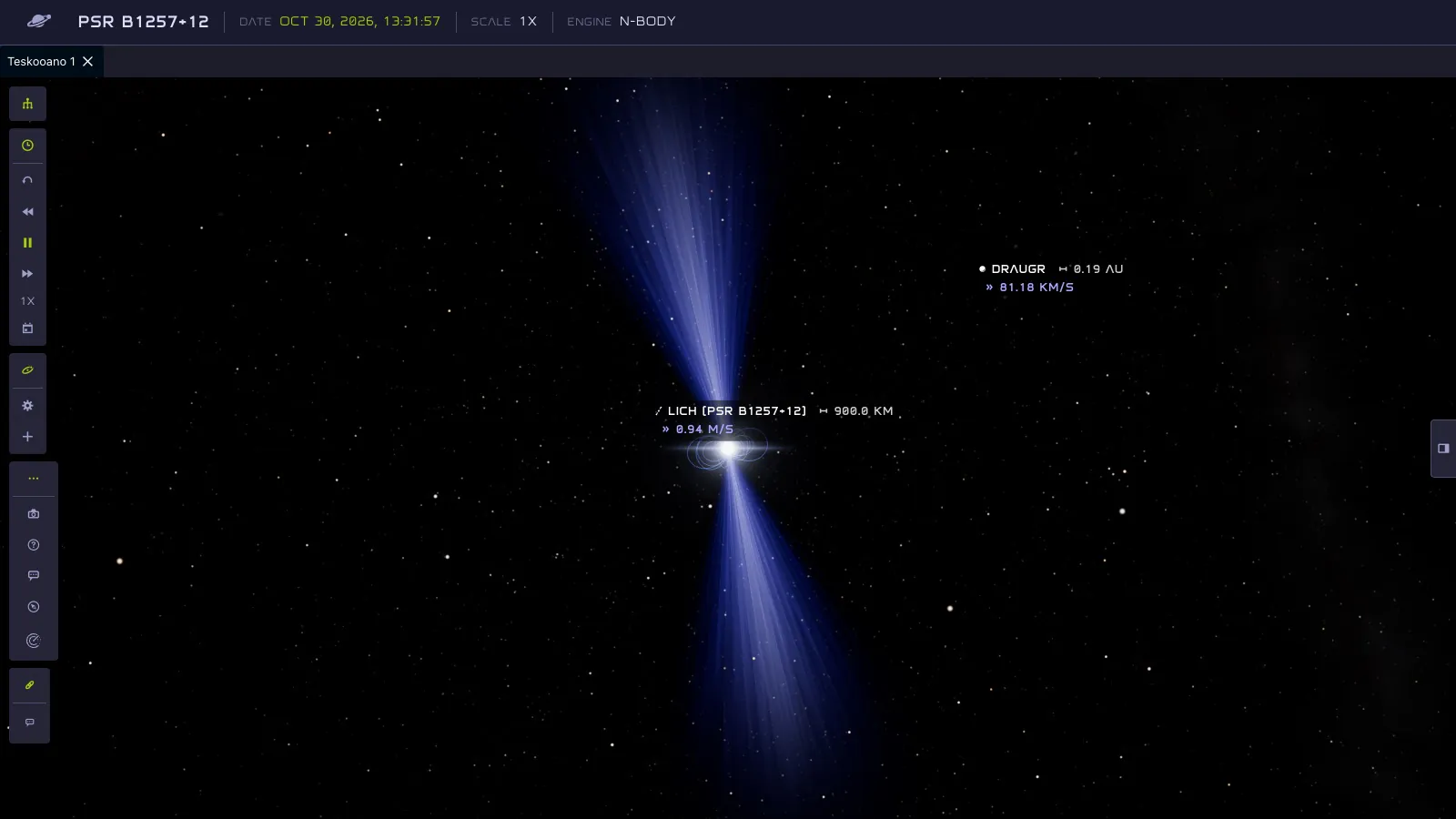
- The pulsar planets of PSR B1257+12, and TIC 4206066, whose two candidate planets were found this year.
Brown dwarfs, hot subdwarfs and carbon stars each glow at their true temperature, giant stars churn, pulse and shed dust, and every body is lit by up to eight suns. Neutron stars got their fields: pulsars sweep beams from their magnetic poles, and magnetars wrap themselves in loops.
Into the belt
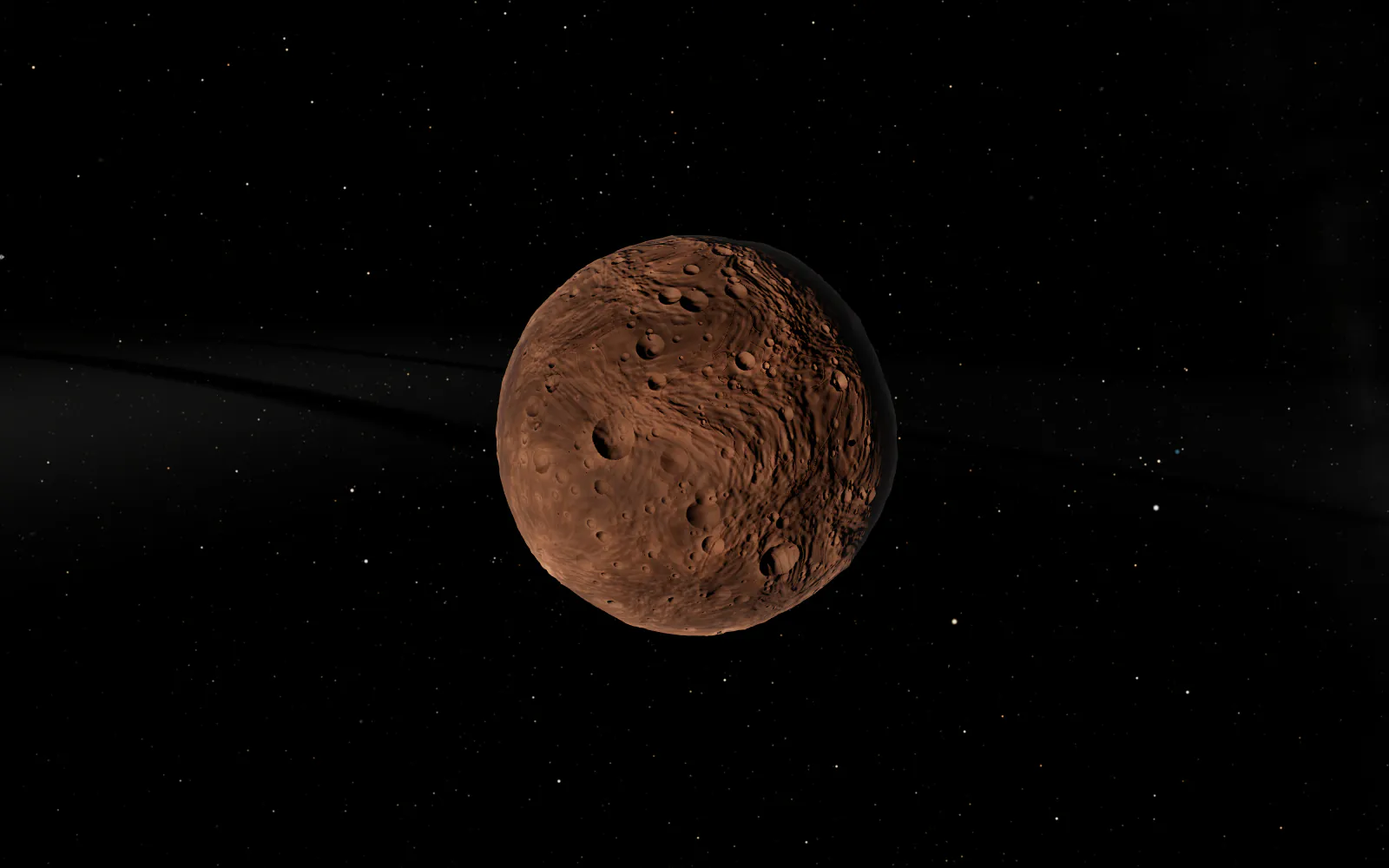
Asteroid belts and the Oort cloud now circle their star at their true speed, years for a lap, instead of spinning wildly when you speed time up. You can see a belt from across the system, see each rock’s shape up close, and fly in: the space around you fills with rubble and dust, lit from behind by the star.
A calmer view
A lot of this release is taking things away so the sky shows.
- One button opens the body list; every other panel is a tab in the side panel, and a body’s details slide out over the view.
- Labels hide when a star, planet or moon is in front of the body.
- Lens flares are quieter: smaller, with a few faint ghosts, falling away quickly with distance, and gone once a star is close enough to see as a disc. A planet crossing its star dims the flare, and one switch turns them off everywhere.
- Orbit lines: in N-body mode, a line is the path a body has actually flown. In Ideal mode you get trails by default, with full orbits a switch away in Settings.
- One loading screen from start-up to the finished system.
- Phones and tablets: every button is one fingertip-friendly size, and following a body closes the sidebar so you can see it.
- Faster: systems of more than 512 bodies run 12 to 17 times faster, and star glow costs half as much.
Yours to keep
Teskooano now has plans, for anyone who wants to go further.
- Plans: free, Adventurer and Explorer, with room for 15, 100 and 250 bodies. Adventurer takes photos and records video up to 2K, Explorer records up to 4K. Change plan, or move to Lifetime, from Your Space, with the cost shown before you confirm.
- Lifetime: €129 once, and €99 for the first 42 Founders. Every app update is included, and so is a year of API access and cloud storage.
- Sign in with Google or Steam as well as GitHub, and merge two accounts made by mistake.
- Your settings are saved between visits, to your profile when you’re signed in.
- Feedback from the simulator or the site, a public roadmap, and a page for every named release, like this one.
Also in this release
- Picking a body while the camera is still flying, including the Grand Tour’s Next, no longer snaps back to the earlier flight.
- Desert, ice and rocky worlds without their own colours get their kind’s colours instead of Earth’s green.
- Around a black hole the zone map shows whole, with its horizon left clear.
- Adding a second view while a system is open no longer crashes it.
- AU distances read “1 AU” with a small ring marker, instead of a dash that looked like a minus sign.
- Release videos play and seek in every browser, Safari included.