What's in a system
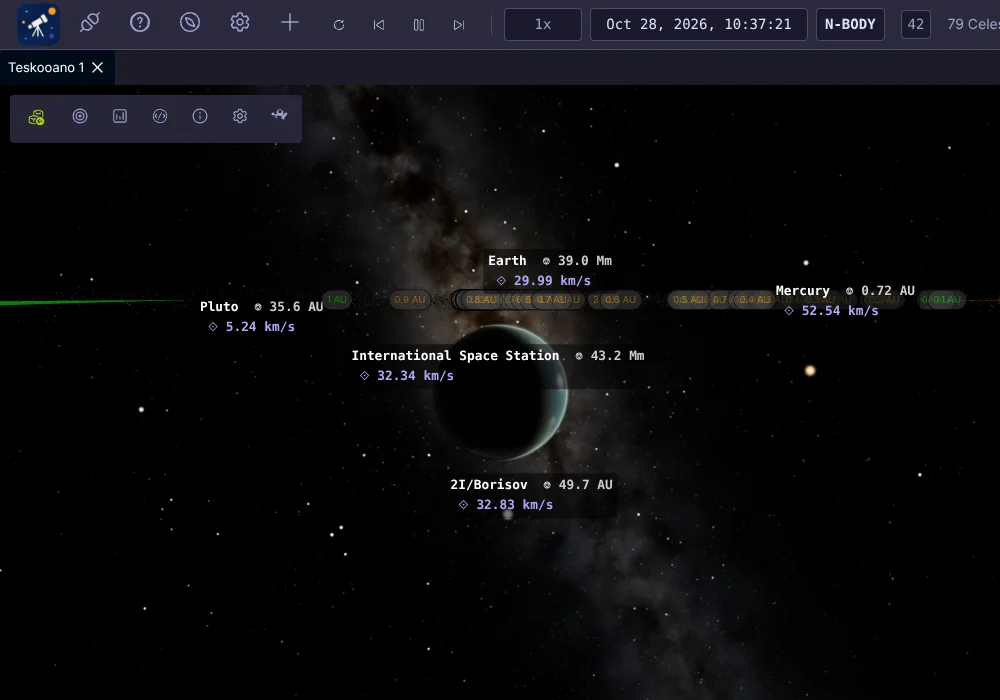
Every body in Teskooano has a mass, a radius and an orbit, and takes part in the N-body simulation. How each one is drawn depends on its type.
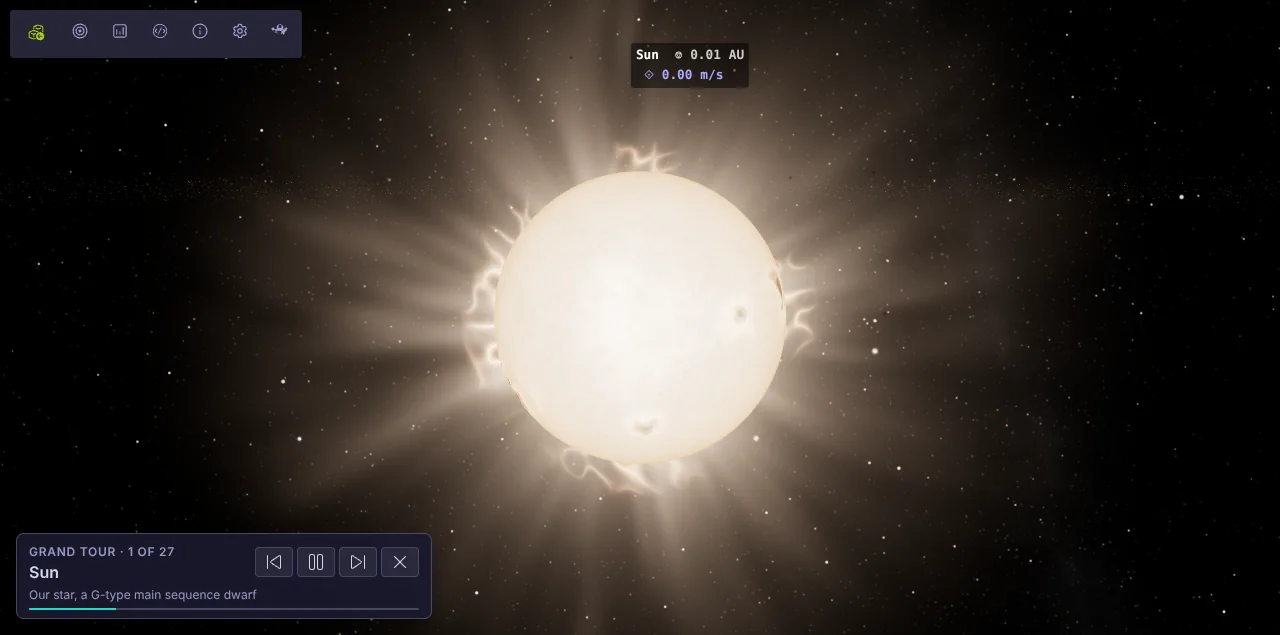
Main-sequence stars have a photosphere with limb darkening, boiling granulation and sunspots, coloured by their temperature, and an active corona with streamers and prominences. Generated systems can also have binary stars, giants, white dwarfs, neutron stars, Wolf-Rayet stars and black holes.
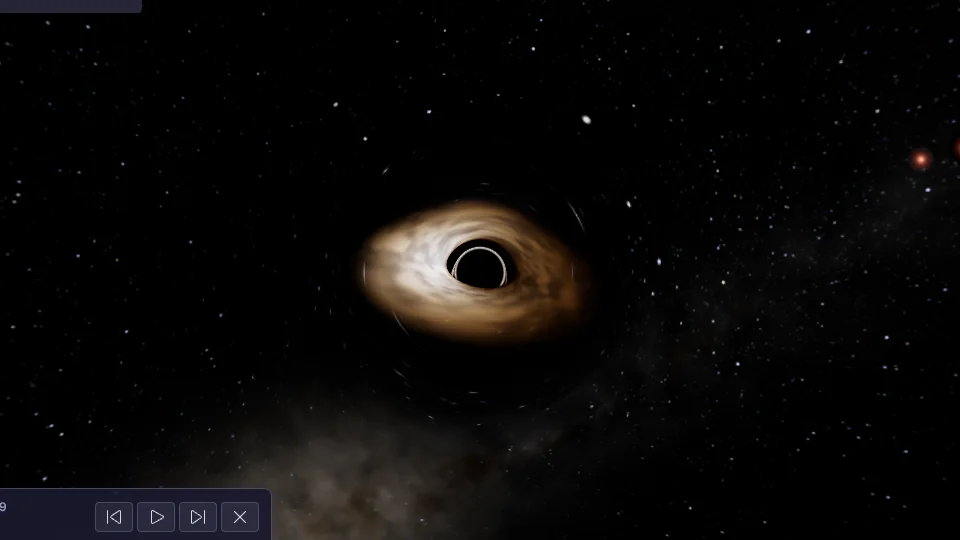
- Black holes are ray-traced: a black shadow edged by the photon ring, a thin accretion disk brighter on the side moving towards you, and the sky and any bodies behind bent around them.
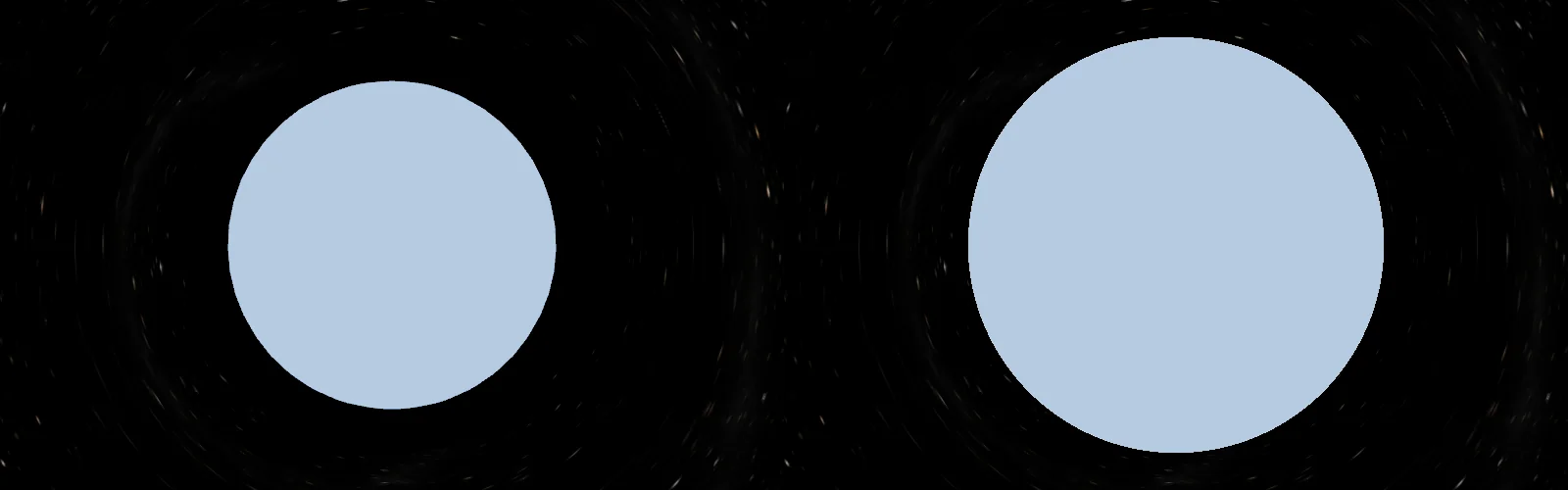
- Neutron stars bend light around themselves in the same way.
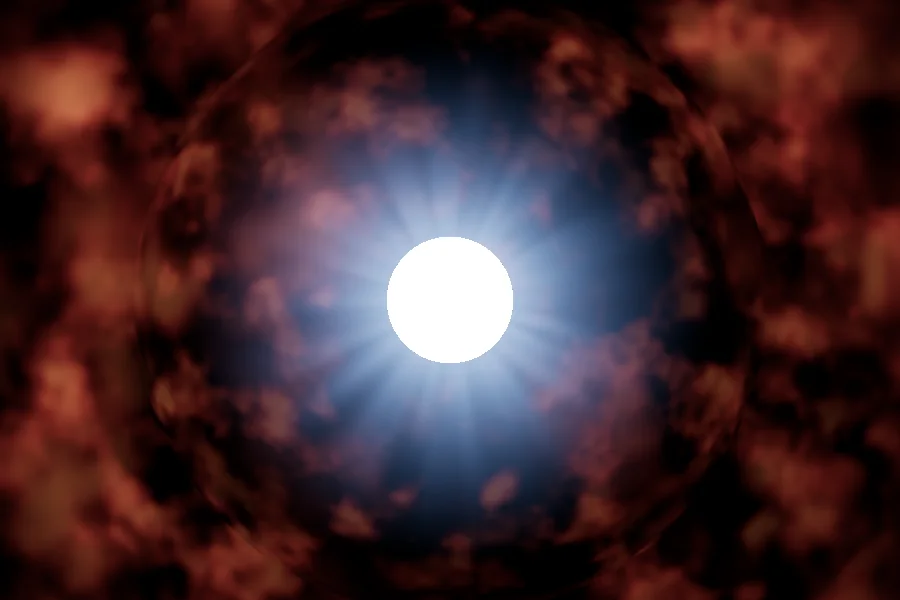
- Wolf-Rayet stars are a hot core inside a dense stellar wind and a clumpy shell of ejected gas.
Planets and moons
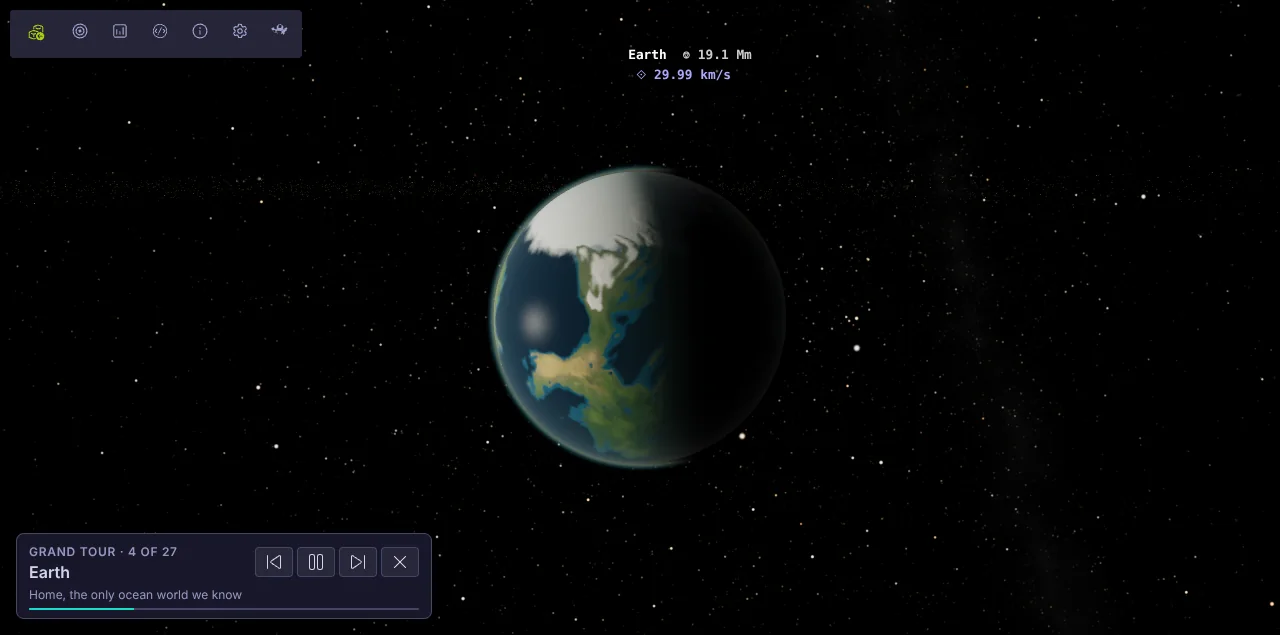
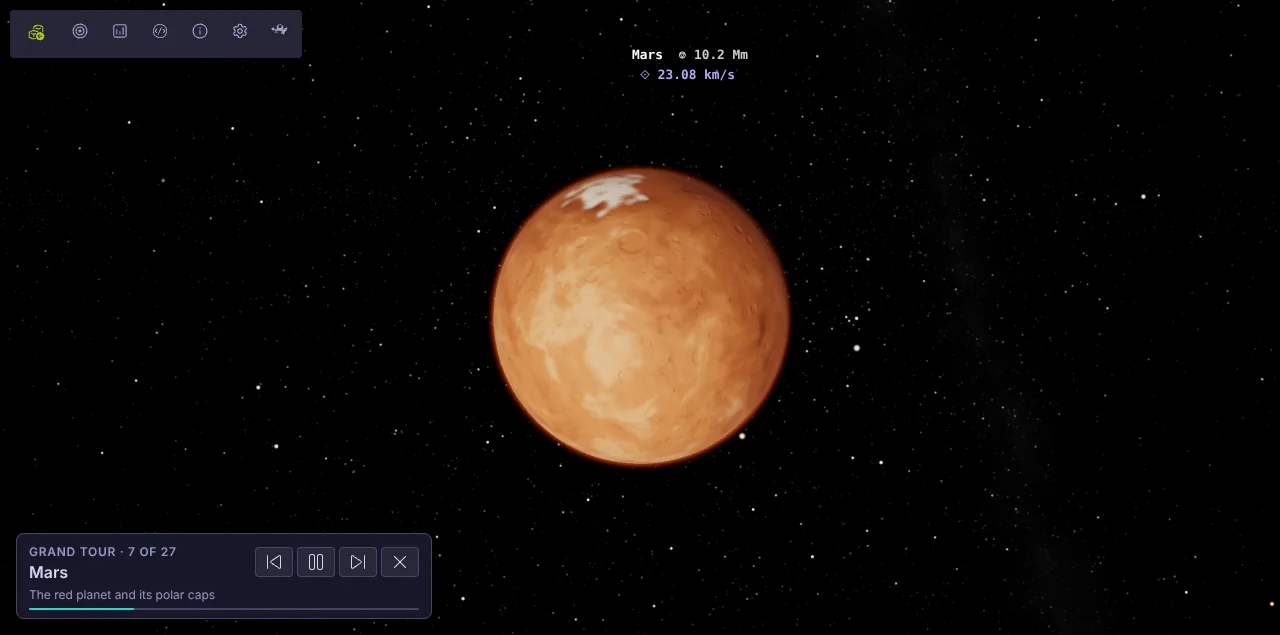
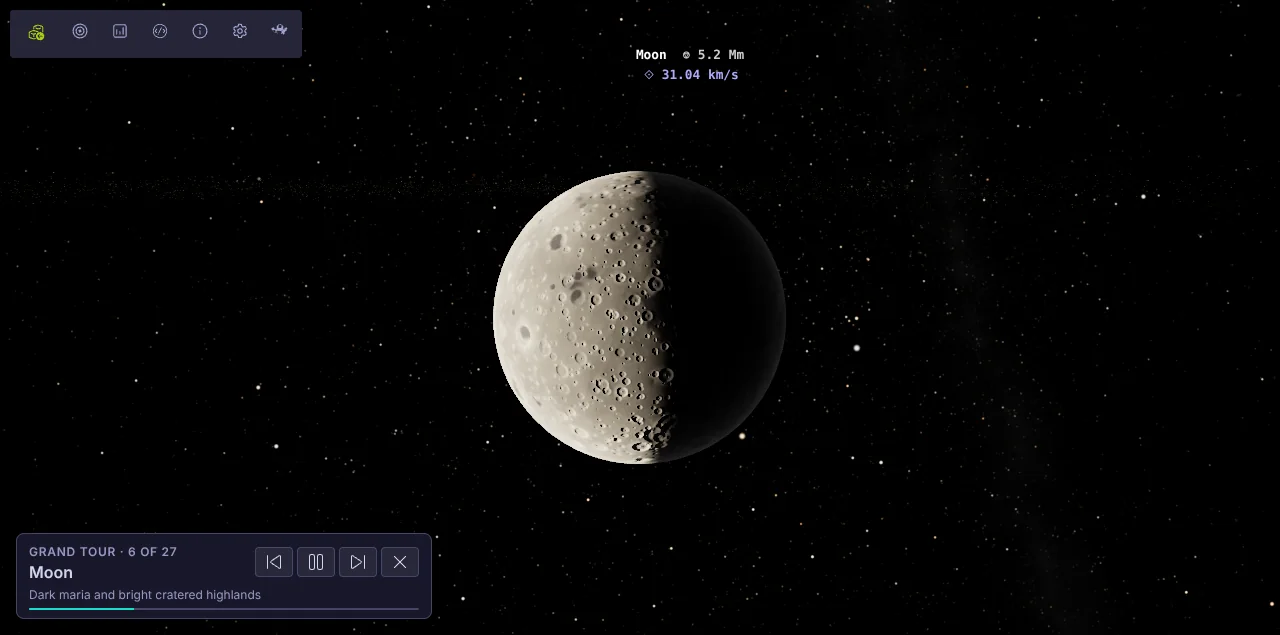
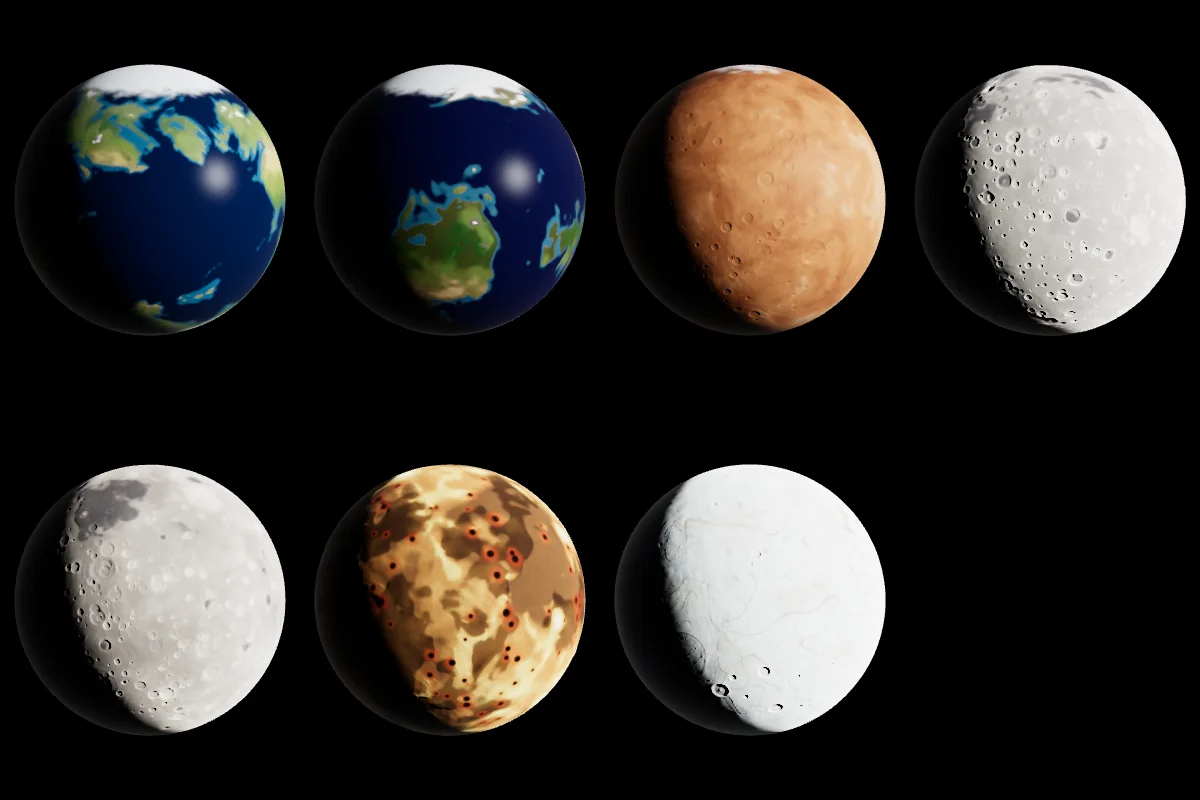
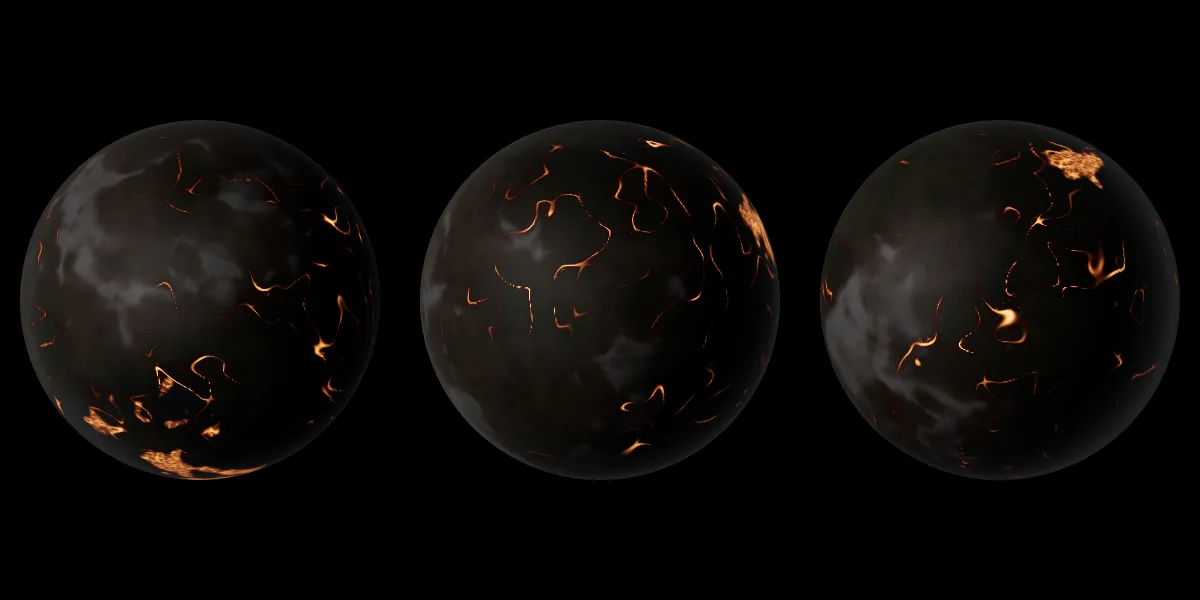
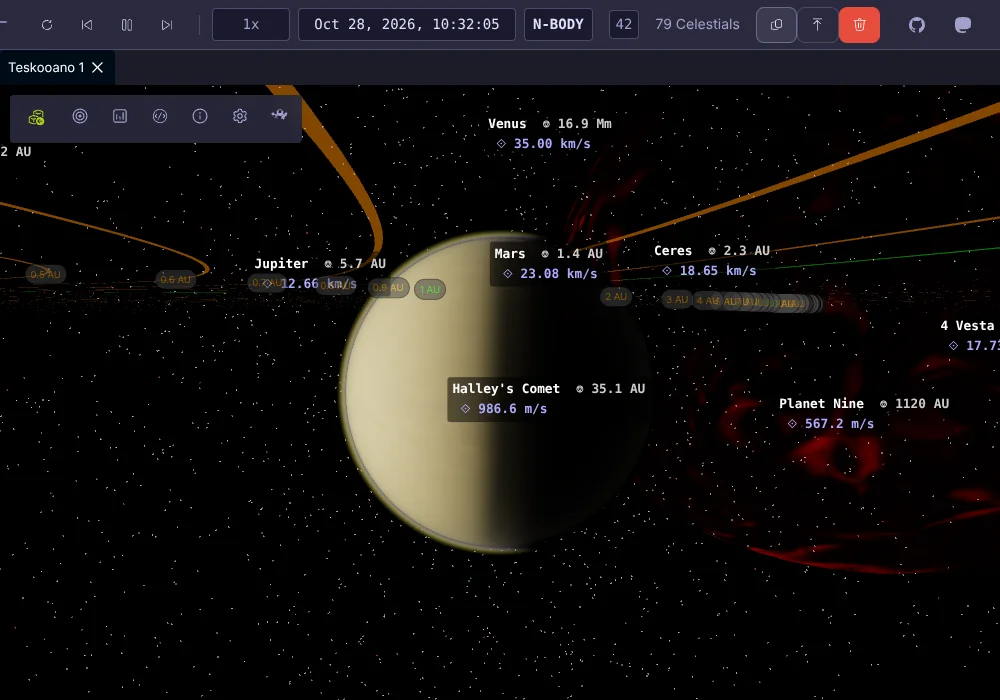
Section titled “Planets and moons”Rocky planets and moons get a surface baked on your GPU from their physics and geology: relief that scales with gravity, continents and oceans, mountain belts, craters of every size, maria, icy cracks, volcanoes and lava, polar caps and climate zones. A quick preview appears straight away and the full-detail surface swaps in as you get close. Bodies with an atmosphere get a scattered sky glow, and very thick atmospheres like Venus and Titan hide the surface under a cloud deck.
Gas giants and rings
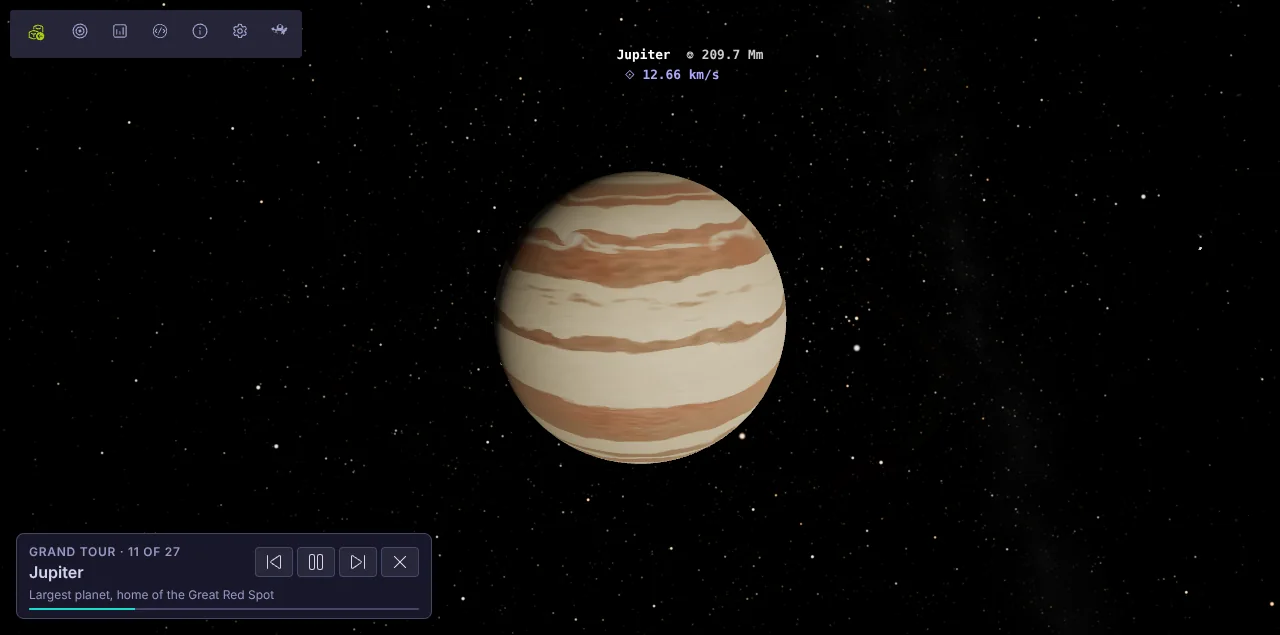
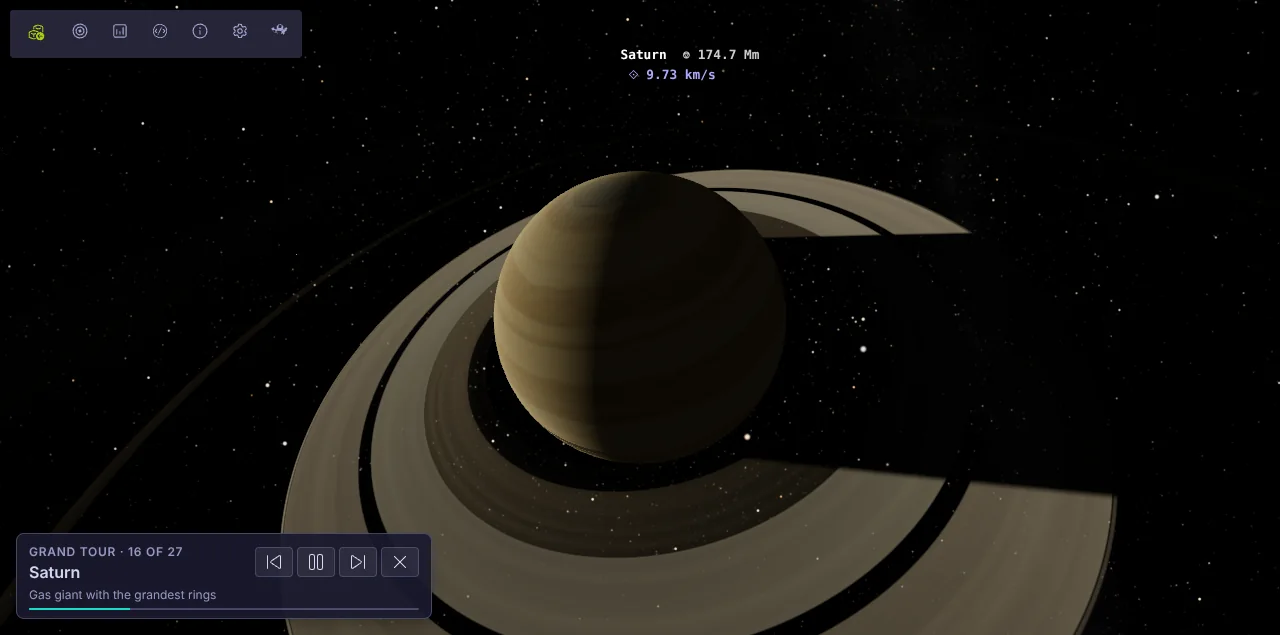
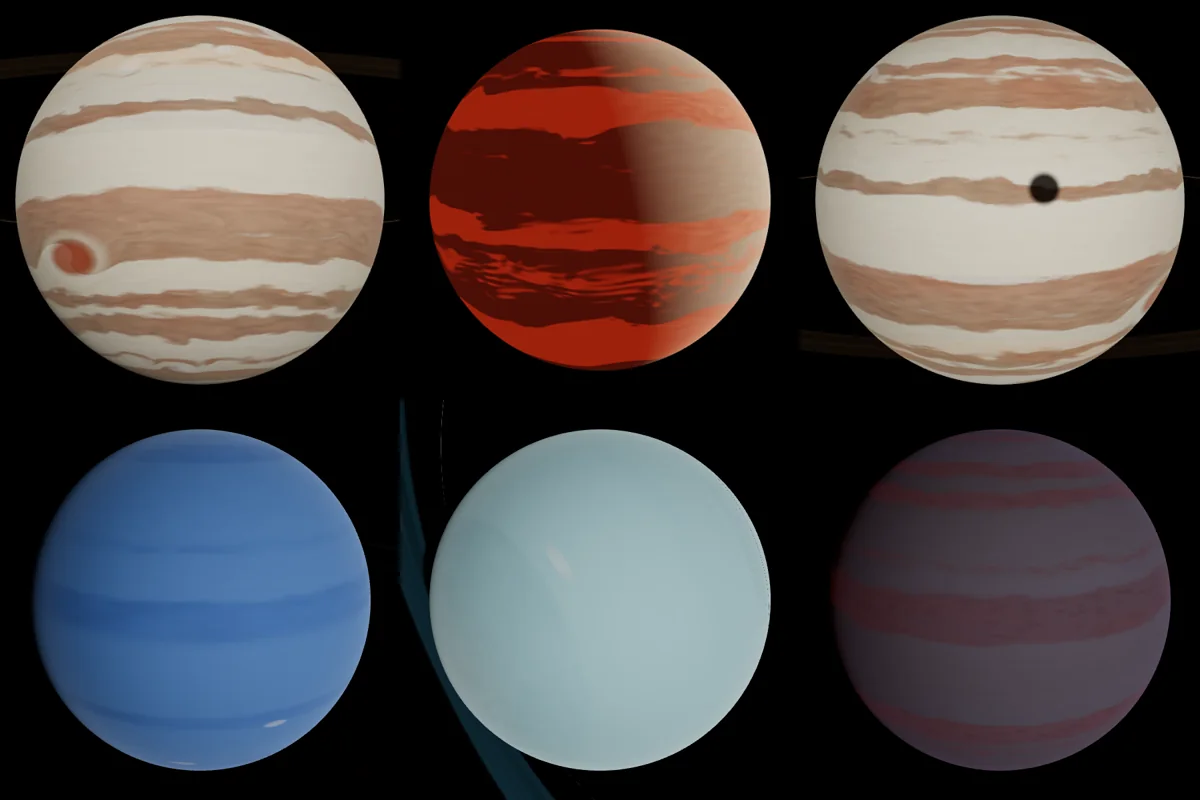
Section titled “Gas giants and rings”Gas giants have latitude bands carried by zonal jets, storms and spots, polar hexagons, and the shadows of their rings and moons. Rings have ringlets and gaps, the planet’s shadow across them, and are lit correctly from either side.
Small bodies
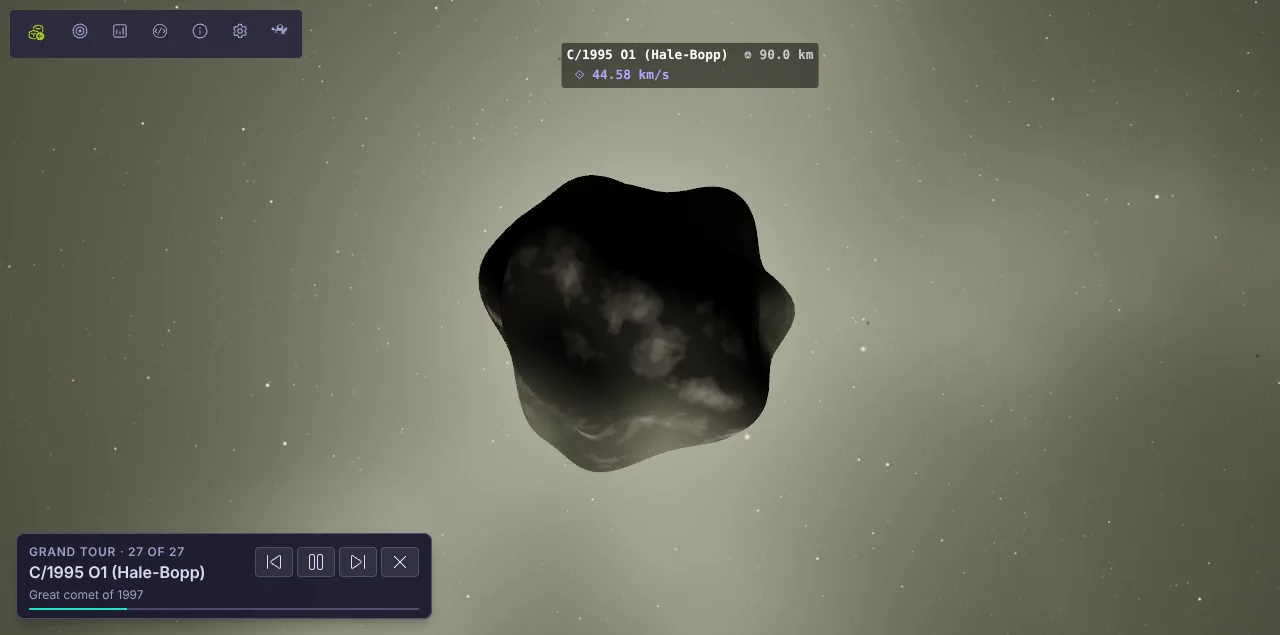
Section titled “Small bodies”- Comets have a dark nucleus inside a coma of dust and steam, with a tail pointing away from the star and jets from the sunlit side. They become active as they come within about 4 AU of their star.
- Asteroid belts and the Oort cloud are thousands of lit rocks of realistic sizes and colours.
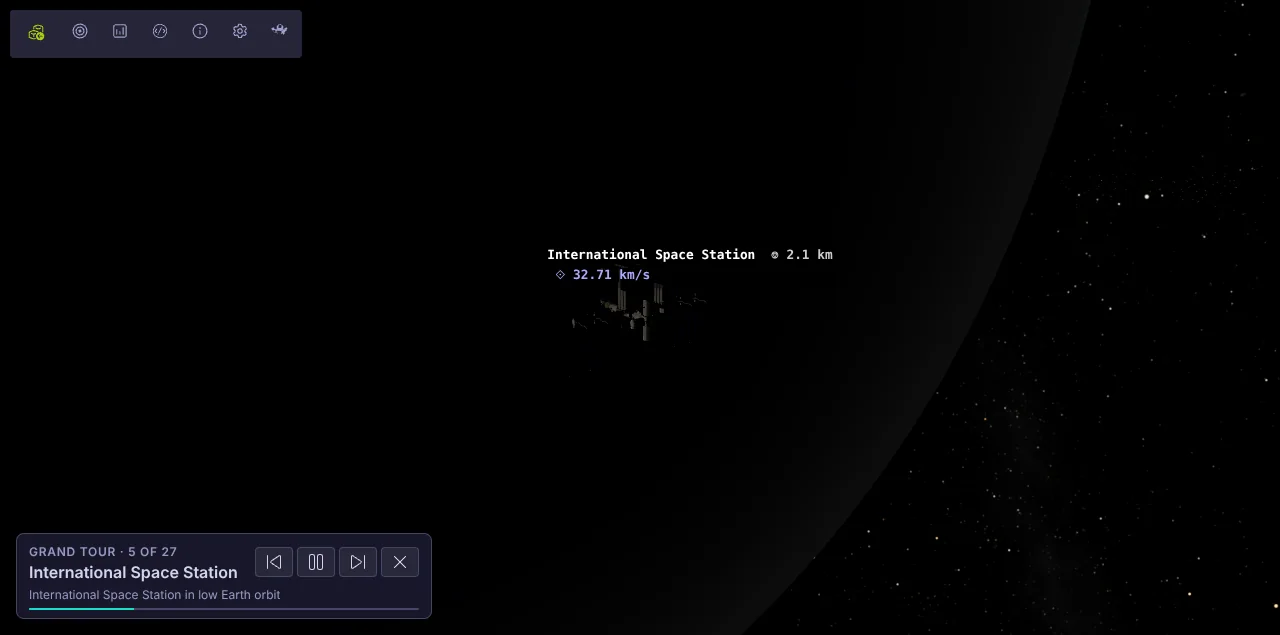
- Satellites in Sol, such as the ISS and the James Webb Space Telescope, have their own models and follow their real orbits.
The sky
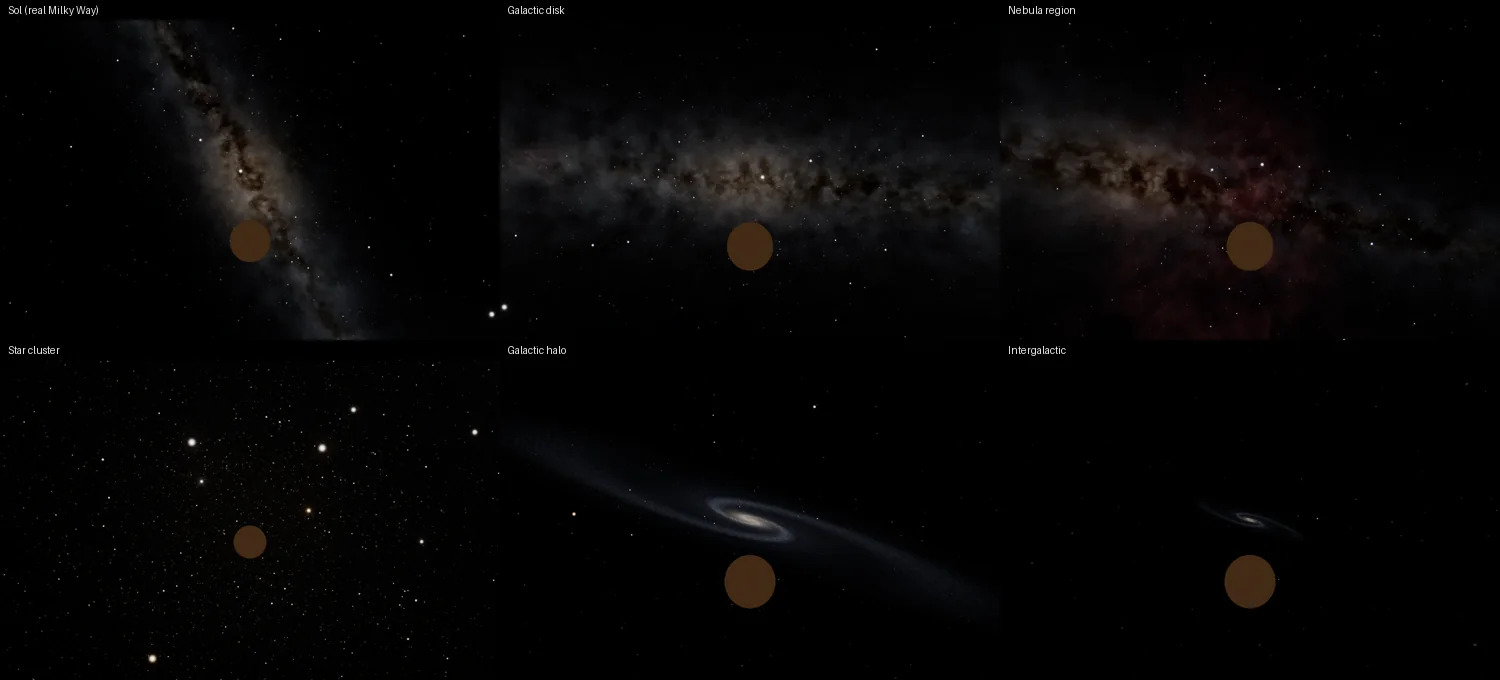
Section titled “The sky”Sol’s background is our real Milky Way with its dust lanes, the Magellanic Clouds and the Andromeda galaxy, plus about 24,000 stars with real counts and colours. Each generated system gets a sky of its own: inside a galactic disk, near a nebula, inside a star cluster, out in the galactic halo, or in intergalactic space.